Whitehall Township officials signaled a pivotal moment for the community’s financial future Monday night, approving a series of budget and funding measures while openly acknowledging a growing gap between rising costs and available revenue.
At the center of the March 23 board meeting was a clear message. The township’s current funding structure is no longer keeping pace with growth, and difficult decisions are beginning to take shape.
A Budget That Tells a Larger Story
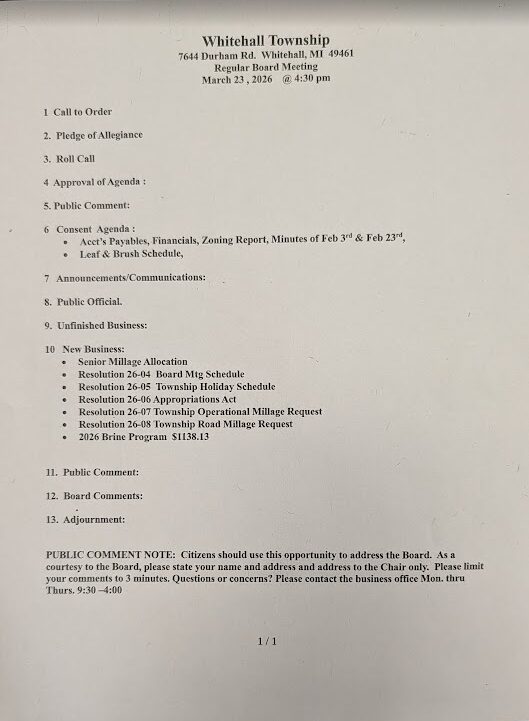
The board approved its annual appropriations act, effectively setting the township’s budget for the coming fiscal year. But the discussion around that vote carried more weight than a routine approval.
Leaders pointed out that for the third consecutive year, the township is relying on reserve funds to balance the budget. That pattern, if continued, would not be sustainable long term.
Officials noted that Whitehall Township is experiencing steady growth, which brings increased service demands and rising operational costs. At the same time, its revenue base remains limited compared to neighboring communities with higher-value properties.
The takeaway was direct. Without changes, the township could face significant financial strain within the next several years.
Millage Proposals Move Forward
In response, the board approved two separate millage proposals that will ultimately go before voters.
The first would fund general operations, aimed at stabilizing the township’s ability to provide core services. The second focuses on roads, one of the most visible and frequently discussed concerns among residents.
Board members acknowledged that road conditions have become a common frustration, with some describing deteriorating infrastructure and increasing maintenance needs. Even with the proposed funding, there was recognition that the township may still be playing catch up.
There was also discussion about balancing what is needed with what voters may realistically support. While some members expressed interest in higher funding levels, the board ultimately settled on a proposal they felt had a better chance of passing while still making progress.
Together, the millages represent both a response to current needs and a test of public support for increased investment in township services.
Senior Funding Sparks Community Feedback
Another point of discussion came during approval of senior millage allocations, which support programs including local food assistance efforts and the senior center.
While the allocation passed, board members spent time discussing public complaints from residents who feel excluded from the process, even though few of those concerns are being raised during township meetings themselves. Officials noted the disconnect between hearing criticism secondhand and not seeing residents come forward during public meetings to speak directly to the board.
That led to a broader conversation about how to better capture community input, especially from people who are not attending meetings. Board members said they may look into comment cards, written suggestions, surveys, or a similar process to give residents another way to share concerns and ideas before future decisions are made.
Growth, Costs, and the Road Ahead
Beyond specific votes, the broader theme of the meeting centered on change.
Whitehall Township is growing, and with that growth comes pressure. More residents, more infrastructure needs, and higher service expectations are all contributing to rising expenses.
Officials emphasized that the current funding model, built around a relatively low millage rate, was designed for a different time. Maintaining services at today’s level, let alone improving them, will require adjustments.
Additional Updates and What Comes Next
The board also approved its upcoming meeting and holiday schedules, along with routine business items.
Looking ahead, discussions will continue on several fronts, including potential changes to the White Lake Ambulance Authority structure and ongoing conversations about community input on township decisions.
Residents will also have opportunities to weigh in more directly. The proposed millages will go before voters, making public engagement a key factor in what happens next.
The Bigger Picture
The meeting made one thing clear. Whitehall Township is entering a period where maintaining the status quo is no longer an option.
The decisions made now, both by officials and by voters, will shape how the township grows, how services are delivered, and how challenges like infrastructure and funding are addressed in the years ahead.
Stay connected to what’s happening in our area by visiting CatchMark Community.
Powered by CatchMark Technologies — helping people, solving problems. Explore more on our website.