Hey Wild Fact Fans, Seth here with the new Friday Feature creature. Don’t forget to please like, share and comment questions down below If you have any on this weeks animal ^^
First off, wanna wish you all a happy 4th of july as we celebrate another year of honoring those who thought for our country’s freedom  long ago. And i hope with all thats going on in the world
  , we’ll be able to hold onto this for generation to come
  .
.
And along with that, with this weeks feature Creature; with conservation efforts to help bring back this creature and its ecosystem; i hope this majestic creature can be around for many more generations to come to enjoy their beauty; like the majestic bald eagle  (which i did a post on long ago for 4th of July ironically ^^)
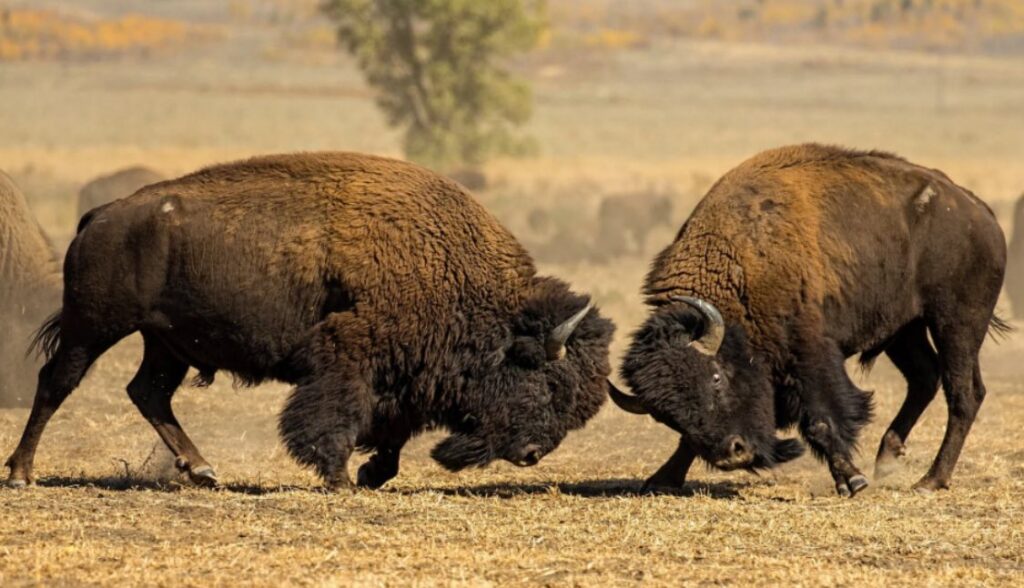
This weeks feature creature is just as much of National American icon as the bald eagle . While it may not soar across the skies; this amazing animal roams slowly or thunders swiftly in giant herds across the plain, cause the earth to shake  , making it feel like an earthquake. Spending their days grazing and helping maintain their vast prairie home, and other days clash horns and heads; crashing
  with a force some would say sounded like thunder
  , this keystone species is one to be truly respected; as we almost took it for granted and overhunted them; thinking that with the millions that once roamed our vast plains ; would never disappear. Today, people are taking a stand to make sure this majestic beast is here for us to enjoy far into the future.
This weeks feature creature is The American Bison 
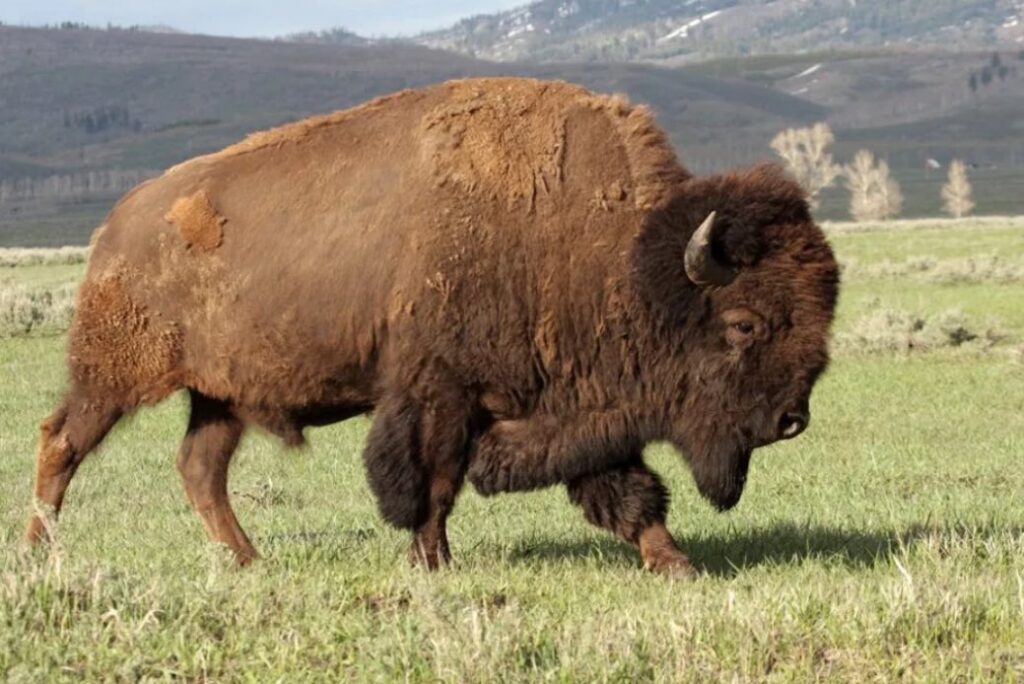
1. Standing 6.5 ft all, 12 1/2 ft long & Weighing in at a ton ; The American bison is the largest land animal in North America (with the moose  being taller and rivaling it a smidge). Bulls (males) are larger than females, with wider, longer and shorter horns then cows (females)
2. There are 2 subspecies of American bison, the Plains bison that live out on prairies and grasslands of Central part of North America ; and the bigger woods bison  that roam boreal forests
  and meadows of Canada
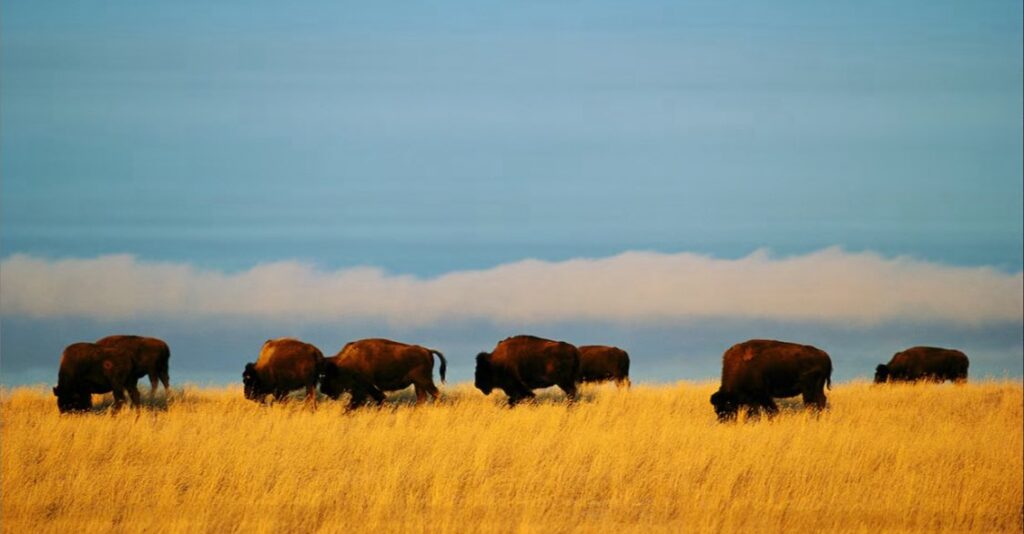
3. Bison often live in seperate gender herds with 1 dominant female in groups of 10-60 in female herds (sometimes merging together to groups of 400!), while males live bachelor herds or on their own. Herds also come together during migrations as well.
4. Despite their heavyweight size; American Bison are very fast  , graceful and agile for their size. An American bison can charge at top speeds of 35 to 40 mph (faster than some horses
  !), can turn on a dime , can jump up to 6ft straight into the air, and are good swimmers
  ; covering rivers .6 miles wide!
5. Calfs can stand, walk and run  after a couple of hours being born!
6. While Bison have poor eyesight  , they have excellent hearing
  and sense of smell
  , which comes in handy to find water
  , food; and hear & smell enemies such as Wolves
  , Black and Grizzly bears
  ; the main predators of adult bisons. Coyotes and mountain lions also prey on calves when given a chance
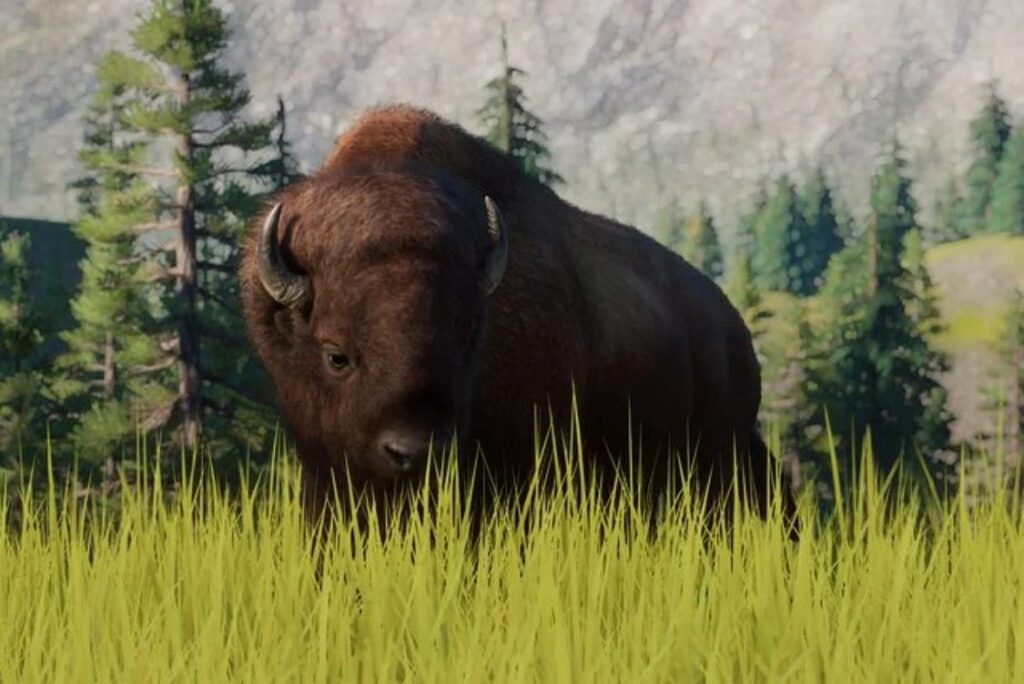
7. Strength, sharp 2ft long horns , powerful kicks  and herd mentality is their main defenses; with the herd charging all at once as massive force against a threat; with their tails held up in the air as a signal to let the other herd know of danger
  .
.
8. Like most bovines  , Bison are mainly grazers that spend their days grazing on the mixed grasses , sedges, herbs
  , flowers
  and brush of the prairie. A single bison can eat up to 25 lbs of food a day; covering 2 miles a day to find enough to find the food they need; covering vast areas like giant furry lawnmowers XD!
9. Grazing is a main reason Bison are a keystone species for the prairie; as grazing along with wildfires  burning out old plants
  and little rain (at least enough for prairie plants) helps keep the prairie healthy. Plus eating the plants down and making way to shorter more tender plants allows other herbivores like prairie dogs , elk and Pronghorn to get to the stuff they like to eat. And of course; Dung
  makes great
  fertilizer
10. While roaming, they also help other creatures by scaring up food for smaller predators; from insects  that small birds
  like cowbirds eat, to small mammals and birds that predators like coyotes like to eat.
11. To deal with biting insects like mosquitos  ; Bison take dust baths
  and have been observed rubbing themselves against strong smelling trees such as cedar and pine, which are good deterrents against them. Their swishing tails also act like fly swatters to bat bugs away.
12. A thick reddish brown fur coat  that gives them the nickname “Red Dogs
  “ helps keep them warm during the harsh winters
  . The fur is so thick, snow can land on their fur coats without melting
  ! Along with their strong hooves ; they use their coarse head hair to dig for food under the snow . They shed their fur coats in the spring to keep cool
  .
.
13. Males go head to head in serious battles during the breeding season (from July to September) to have mating rights with a herd of bison. With strong hump muscles and thick skulls to absorb head on collisions; these battles can be heard from 3 miles away! Some battles can be so fierce; some combatants dont survive afterwards from being too weak and wounded.
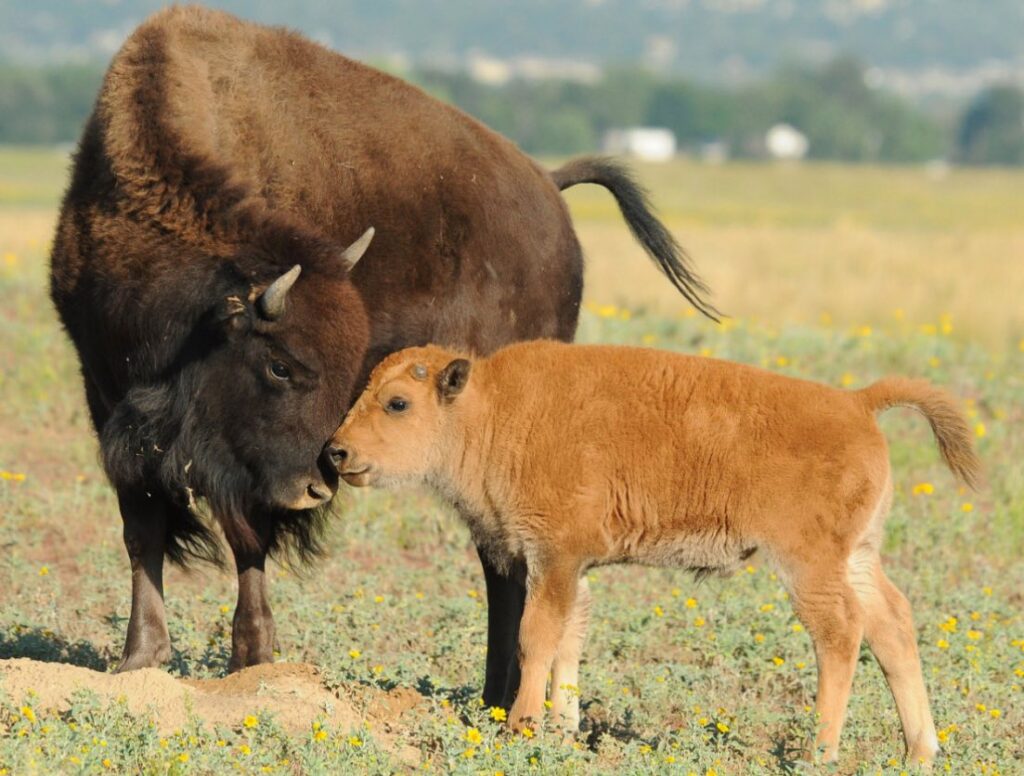
14. A mother gives birth to a single calf in april or may after a 10 month period pregnancy. While females stay in their herds; Male calves leave at 2 to 3 years old. born earlier in the breeding season are more likely to grow up to become a dominant bull.
15. Back in the 1800’s, there use to be 600 million bison roaming free across the prairie’s and plains of North America ; but by the 1900’s thru a combo overhunting and habitat destruction for farming and ranching land; there was around only 1000 left  . Thankfully, conservation efforts have helped bring their populations back up to Near Threatened status of 200,000 still around today
Next weeks feature Creature hint  : this aquatic reptile of Asia looks like a crocodile
  , but has sharper claws and a venomous bite
Welcome Seth & His Wild Animal Facts to CatchMark Community!