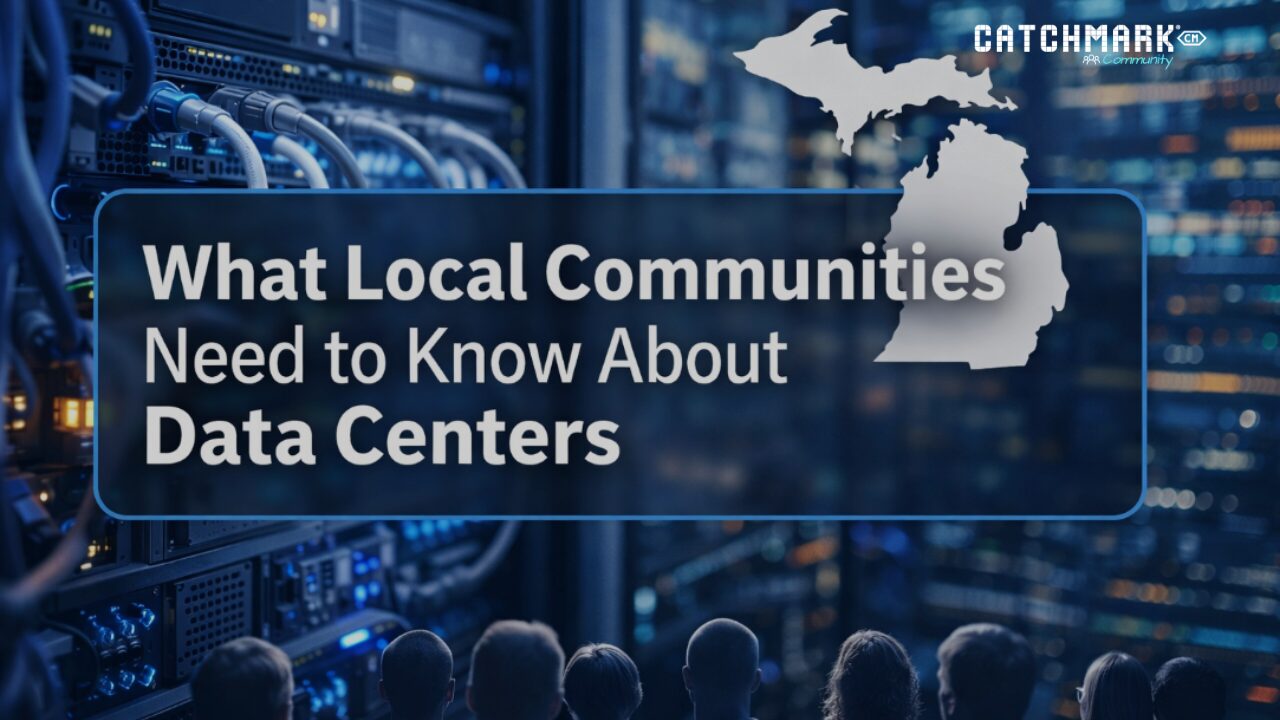
Before artificial intelligence, cloud computing, and digital infrastructure became dinner table conversations, most people had probably never thought much about data centers.
Now, they are becoming part of local planning discussions across the White Lake area.
When Common Ground Community of White Lake hosted a second forum on data centers at the White Lake Community Library, presenter Marisa McGlue said the conversation had evolved significantly since the group’s first presentation earlier this year. Residents no longer wanted only an explanation of what data centers are. They wanted to understand how local communities can prepare for them.
“There has been a lot of news about data centers in the past four months,” McGlue told the audience as she introduced the discussion, noting that the presentation would again cover the basics but place greater emphasis on local control through planning and zoning ordinances.
For many in attendance, that shift reflected a larger question.
If data centers continue expanding across Michigan, what role do local communities have in shaping what comes next?
From technology to community planning
McGlue explained that today’s demand for data centers is being fueled largely by government and enterprise computing, as artificial intelligence becomes more integrated into everyday operations.
She shared a recent conversation with someone whose human resources position had been replaced by an AI system used for employee onboarding, offering a reminder that the technology driving data centers is already changing workplaces.
While many discussions focus on massive hyperscale facilities, audience members wondered whether future technology might eventually make data centers much smaller, much like computers themselves have shrunk over the decades.
McGlue acknowledged that technology will continue to evolve, but noted that communities must plan for the facilities being proposed today, not what might exist years from now. Even smaller data centers, she said, still require the same basic infrastructure, including electricity, water, cooling systems, backup generators, and security.
That reality became one of the recurring themes of the evening.
Regardless of size, communities should be thinking about how those facilities fit into their long term plans.
More communities are creating ordinances
Since the first presentation, local governments have begun taking action.
McGlue said White River Township and Montague Township now have data center ordinances, while audience members noted that Fruitland Township and Hart are also working through the process.
She encouraged every municipality to consider developing an ordinance, even if a proposal does not appear imminent.
“You need an ordinance, even if you don’t think you do,” she said.
The reason, she explained later in the presentation, is simple.
“If you don’t have an ordinance, you don’t have any guardrails at all.”
Michigan law generally does not allow municipalities to prohibit an otherwise lawful land use through exclusionary zoning. Instead, local governments can establish standards that determine where facilities may be located and what conditions they must meet.
That means ordinances become the community’s opportunity to address issues before a proposal arrives.
Questions centered on quality of life
Much of the evening unfolded through audience questions.
Residents asked about water use, electrical infrastructure, noise, environmental impacts, and what could happen decades after a facility is built.
One discussion centered on the lifespan of servers. Like phones and computers, McGlue explained, servers must be replaced periodically as technology advances, which is one reason tax incentives have become part of the conversation surrounding large data centers.
Another exchange focused on environmental oversight.
McGlue explained that the Michigan Department of Environment, Great Lakes, and Energy, commonly known as EGLE, enforces the environmental laws established by the state rather than creating those laws itself. Local ordinances, she said, can require additional studies and environmental reviews that help communities understand potential impacts before construction begins.
Audience members also questioned what might happen if a data center eventually closed.
Could the property be reused?
Could contamination prevent future development?
McGlue said those are questions communities should consider now through decommissioning requirements and financial assurances that can be written into local ordinances, ensuring sites are properly restored if operations end.
Looking beyond a single project
The discussion also expanded beyond individual facilities to the infrastructure that supports them.
McGlue described how Michigan’s electrical grid is part of the larger Midcontinent Independent System Operator network, which serves a broad region of the country. She noted that experts have identified the need for significant grid upgrades regardless of whether additional data centers are built, adding another layer to the conversation about future energy demand.
Throughout the evening, residents returned to the same central question.
How can communities prepare before they are asked to make decisions?
For McGlue, the answer continues to come back to planning.
Ordinances cannot prevent every type of development, but they can establish expectations for setbacks, noise, lighting, traffic, water use, environmental review, decommissioning, and other community priorities before developers ever submit an application.
The presentation did not suggest that a data center is coming to the White Lake area.
Instead, it reflected a broader shift taking place across the region.
Communities that only months ago were learning what data centers are are now deciding how they want to respond if one someday arrives.
For many who attended, that conversation is no longer about technology alone.
It is about making sure local communities have a voice before important decisions reach their doorstep.
CatchMark Community is more than a weekly read. It’s an ongoing conversation. Follow along on social media for daily stories, local highlights, videos, and moments from around the White Lake area.
Facebook • Instagram • YouTube • TikTok • LinkedIn • X
Stay connected to what’s happening in our area by visiting CatchMark Community.
Powered by CatchMark Technologies — helping people, solving problems. Explore more on our website.