Each week, CatchMark Community features a Wild Animal Fact from Montague native Seth Simon, the creator of the popular bite-sized wildlife series. Seth is known for his upbeat personality, love of animals, and knack for turning fascinating facts into fun, 60-second reads. His goal is to spark curiosity, encourage conservation awareness, and bring a little joy to everyone who follows along. We’re proud to share his work and add a touch of “wild” to your week.
As part of this weekly feature, Seth brings his signature enthusiasm straight to our readers with a fresh creature spotlight—packed with quick facts, habitat insights, and the unique quirks that make each animal extraordinary. His posts combine education and entertainment in a way that’s accessible for all ages, making wildlife learning both fun and memorable. Enjoy this week’s feature below!
Hey  Wild Fact Fans, Seth here with the new Friday Feature creature. Don’t forget to please like
  , share and comment
  questions
  down below
  If you have any on this weeks animal ^^ or any creature you’d like me to do a post on in the future
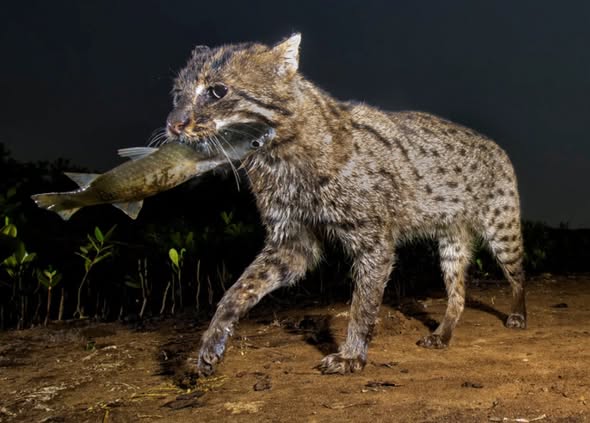
This weeks feature creature is an elusive fisherman of the Mangrove, swamps, & marshlands of Southeast Asia . A sly and cunning predator who blends in well with its olive grey spotted coat as it stalks around the waters edge at night, hoping to snag a tasty fishy treat from the murky waters. This feline is one of the many who break down the statement of cats  hate water
  ; as it’ll even dive and swim underwater to catch a meal. Highly intelligent, adaptable and all around beautiful; this feline is a truly incredible sight for those who get the chance to see one.
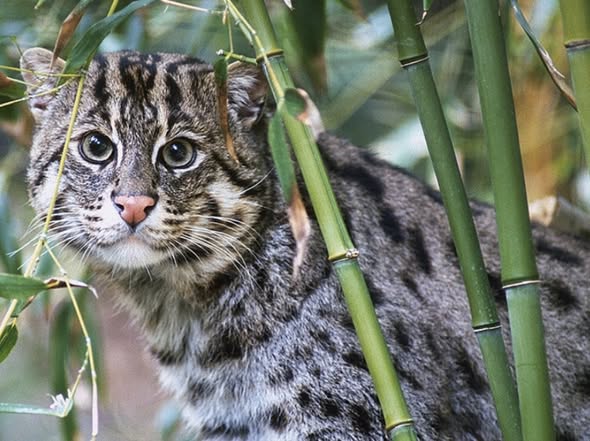
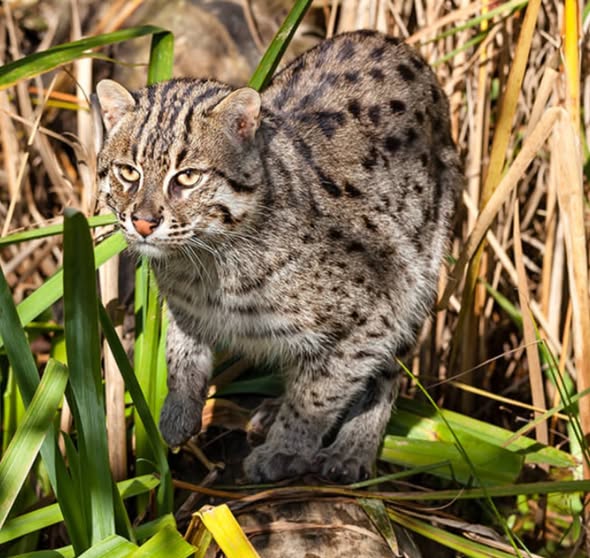
This weeks feature creature is the Fishing  Cat
Cat 
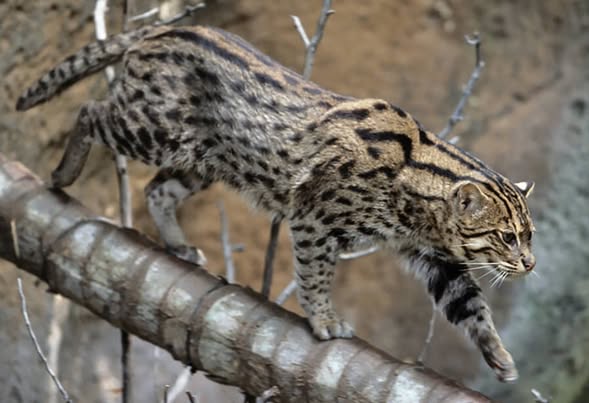
1. Measuring in at 3 1/2ft long, stands 16 inches at the shoulder & weighing 11 to 35 lbs (roughly twice the size of a regular house cat ); Fishing Cats are one of the largest of the small wild cats
2. Often confused with their close relative the Leopard Cat; fishing cats are mainly. Larger, stockier and have more drabber colors compared to leopard cats.
3. Fishing Cats are among the only wild cats in the world  that primarily feeds on fish
  ; which makes up 70% of their diet. But alongside fish
  ; they also feed on many other kinds of prey such as insects
  , snails
  , frogs
  , crustaceans like crabs
  & crayfish
  , shellfish
  , lizards
  , small snakes
  , birds
  like ducks
  , small rodents like rats
  , and even civets, young deer
  & wild pigs
  . Sometimes when fishing cats become desperate cause of human encroachment and other problems; they’ll go after poultry and livestock like chickens
  , goats
  and sheep
4. These felines hunt their prey at night  (or at dawn &/ or dusk) by stalking near the shores and shallows of water ; watching for prey closely with their keen eyes. When prey is spotted; they’ll sometimes gently bat the surface of the water with their paw to imitate the ripples of a fallen insect
  to lure in fish close before pouncing forward to snatch it with their sharp claws which stick out of their paws
  since they cant fully retract them .
5. Along with hunting on the shore; fishing cats are excellent swimmers  and will dive under the water to pursue prey. Their partially webbed paws help them swim with ease alongside their sturdy tail for balance while swimming, a rounded elongated head made for diving, & their double layered fur coat that helps keep them dry
6. Their webbed paws also help keep them from getting stuck in the mud in their marshland habitats stealthily  . This comes in handy when they sometimes feed on the kills of tigers
  ! With being shy and secretive; it makes these felines hard to research
  .
.
7. Their grayish brown fur coat is covered mix of black spots and stripes that helps it blend in with the thick foliage around the swamps and mangroves they call home. Along with being useful for hunting , it helps them hide from predators like leopards  , tigers
  , pythons and crocodiles
  . Keen night vision, sense of smell
  and ears able to rotate almost 180 degrees help them keep on guard from danger
8. Despite being small in size, these wild cats can be pretty fierce and aggressive . Fishing cats make a wide variety of calls such as hisses & growls to ward off attackers alongside making themselves looking bigger and baring their teeth  .
.
9. While mainly solitary ; they come together in the mating season which takes place between January & February. Males find females by sniffing for scent marks they leave behind & listening  for the unique “chitter” noise females make when ready for mating which almost sounds like a duck !
10. After a pregnancy of 2 months to 70 days; a mother fishing cat will give birth to a litter of 1 to 4 kittens which stay with their mother till they’re 10 months old. Kittens start playing in water and learning how to swim  when they’re 2 months old
Next week’s Feature Creature hint 
 : this amazing bird lives in territorial groups on the grasslands & woodlands of africa. The largest of their kind, these red faced and black feathered birds can make calls that sound like lions
  !
!
Wild Animal Facts: Plains Zebra
Stay connected to what’s happening in our area by visiting CatchMark Community.
Powered by CatchMark Technologies — helping people, solving problems. Explore more on our website.