Some of the most important leaders in a community never shows up on a stage.
It does not always come with a title, a microphone, a ribbon-cutting, or a social media post. It often happens in quiet conversations, late-night preparation, early-morning meetings, uncomfortable decisions, and small acts of service that most people will never see.
That is the nature of invisible work.
And the best community leaders are fluent in it.
In towns like Montague, Whitehall, and the surrounding White Lake area, community strength is not built by one person, one organization, or one big moment. It is built over time by people who consistently show up, often without needing credit. They serve on boards. They volunteer at events. They support students. They help organize fundraisers. They sit through long meetings. They make phone calls. They connect people. They carry the details that make good things happen.
Rotary. School board. Chamber of Commerce. Nonprofits. Churches. Youth programs. City committees. Volunteer teams. Booster clubs. Service organizations.
These are not just groups. They are part of the operating system of a healthy community.
The Work People See and the Work They Do Not
Every community has visible moments.
A packed festival downtown. A successful fundraiser. A new program for students. A business opening. A community cleanup. A parade. A scholarship presentation. A public meeting. A school event. A ribbon cutting.
Those moments matter. They create pride and momentum.
But behind every visible moment is a long list of invisible work.
Someone made the agenda. Someone called the volunteers. Someone showed up early to set up tables. Someone stayed late to clean up. Someone found the sponsor. Someone handled the permit. Someone asked the hard question in the meeting. Someone reviewed the budget. Someone wrote the policy. Someone listened to a frustrated resident. Someone gave their Saturday.
That is leadership too.
In fact, it may be the most honest form of leadership.
Community leadership is not just about being seen. It is about being useful.
City and Township Government: The Quiet Work of Keeping a Community Moving
Local city and township government may be one of the clearest examples of invisible work in community leadership.
Most residents notice local government when something directly affects them. A road project. A zoning decision. A park improvement. A new development. A budget concern. A public safety issue. A permit, ordinance, or tax question.
But behind those visible decisions is a great deal of steady, often unnoticed work.
City councils, township boards, planning commissions, zoning boards, clerks, treasurers, managers, department heads, public works teams, police, fire, and administrative staff all help carry the daily responsibilities that keep a community functioning. They deal with infrastructure, budgets, land use, public safety, records, elections, parks, utilities, roads, communication, and long-term planning.
Much of that work is not glamorous. It is detailed, technical, and sometimes difficult. It requires patience, preparation, and a willingness to balance competing interests. It means listening to residents, respecting taxpayer dollars, following the law, and making decisions that may not please everyone.
Healthy communities need local government leaders who understand that their work is not only about the issue in front of them. It is about stewardship. It is about maintaining trust, protecting the public interest, and making decisions that help the community function well today while preparing for tomorrow.
In places like Montague, Whitehall, and the surrounding townships, local government is where many of the practical details of community life are handled. When it works well, people may barely notice it. That is often the point.
Reliable roads, safe neighborhoods, transparent meetings, thoughtful development, well-maintained parks, clean records, fair processes, and responsible budgets do not happen by accident.
They happen because people are doing the invisible work.
Rotary and the Rhythm of Service
Service organizations like Rotary remind us that community leadership is not only about big ideas. It is about consistent action.
The value of Rotary is not simply in meetings or projects. It is in the rhythm of people gathering around a shared belief that their community is worth serving. It is in the relationships formed across generations, professions, and backgrounds. It is in the willingness to ask, “What needs to be done?” and then do it.
That kind of service rarely seeks attention. It often looks ordinary from the outside. But over time, it shapes the character of a place.
Communities are stronger when people choose service before recognition.
School Board Leaders and the Weight of Responsibility
Serving on a school board is another form of invisible work that is often misunderstood.
From the outside, people may only see the public meeting. They may see a vote, a discussion, or a difficult decision. What they may not see is the preparation, the legal responsibility, the policy review, the financial stewardship, the communication with families, and the care for students, staff, and taxpayers.
School board members help guide one of the most important institutions in any community. Their work touches children, families, teachers, employers, property owners, and the future workforce.
It is not easy service. It is often thankless service.
But it matters deeply.
Strong schools do not happen by accident. They require teachers, administrators, parents, students, support staff, and board members all doing work that is not always visible but is always important.
The Chamber and the Work of Connection
Chambers of Commerce also carry a kind of invisible leadership.
A healthy Chamber is not just about promoting businesses. It is about connection. It helps create the conditions where local businesses can succeed, where entrepreneurs feel supported, where visitors feel welcomed, and where community identity is strengthened.
The public may see events, networking, ribbon cuttings, and promotions. Behind that is relationship-building, advocacy, planning, communication, and a constant effort to keep people moving in the same direction.
Local economies need more than storefronts. They need trust. They need collaboration. They need people who understand that a thriving business community benefits everyone.
That work is often quiet. But it is essential.
Volunteers Are the Backbone
Volunteers are the backbone of small-town life.
They coach. They mentor. They serve meals. They organize events. They raise money. They sit on committees. They check on neighbors. They lead youth groups. They keep traditions alive.
Many volunteers do not think of themselves as leaders. They may say, “I just help out.”
But that is leadership.
Leadership is not always a position. Sometimes it is a posture. It is the decision to take responsibility for something that matters, even when no one requires it.
Every healthy community depends on people who are willing to do more than consume the benefits of living there. They contribute to them.
Behind-the-Scenes Leaders Build Trust
Invisible work builds trust because it proves commitment over time.
Anyone can show up when there is applause. Fewer people show up when the task is tedious, the issue is complicated, or the reward is unclear.
The strongest community leaders understand that progress often depends on work that is slow, relational, and unglamorous. They are willing to have the hard conversation. They are willing to listen longer than they speak. They are willing to help without making themselves the story.
That kind of leadership creates stability.
It also creates credibility.
People trust leaders who have been present before the spotlight appeared.
The Danger of Undervaluing Leaders Invisible Work
One challenge in modern community life is that we often reward visibility more than contribution.
Social media can make it easy to confuse attention with impact. Public recognition has its place, but it is not the same as service. A person can be highly visible and not very useful. Another person can be almost invisible and absolutely essential.
Communities should be careful not to overlook the quiet workers.
They are often the ones holding things together.
When invisible work is ignored, people burn out. Volunteers feel taken for granted. Board members get discouraged. Community groups struggle to recruit the next generation of leaders.
Saying thank you matters. Sharing the load matters. Inviting new people in matters. Teaching younger leaders how community service works matters.
Invisible work should not remain unsupported work.
Leadership That Lasts
The best community leaders understand that their role is not just to accomplish something today. It is to strengthen the community for tomorrow.
That means building relationships, developing future leaders, improving systems, and leaving organizations better than they found them.
It means caring more about the mission than the credit.
It means being willing to serve in ways that may never be fully recognized.
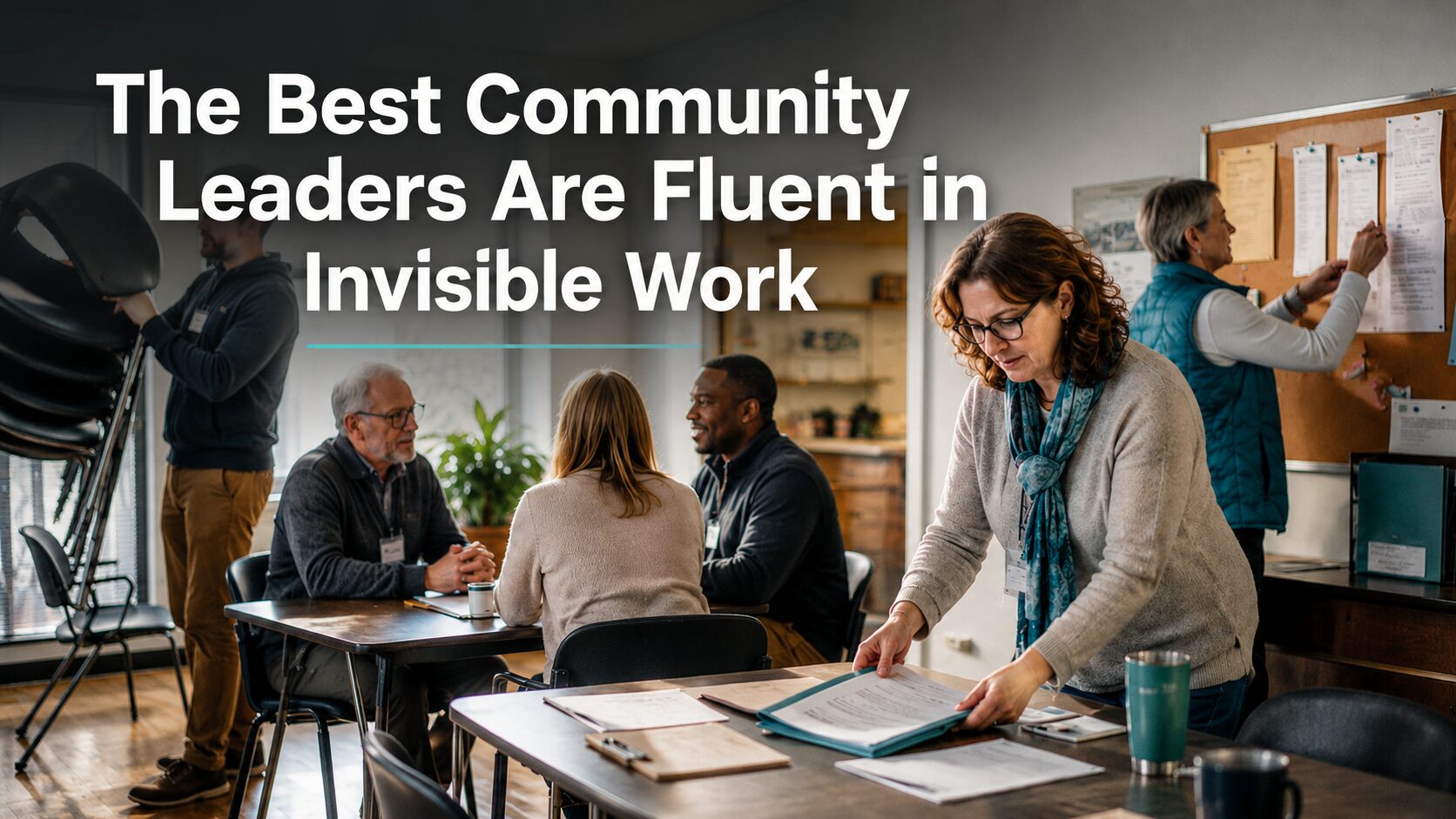
In communities like ours, that kind of leadership is everywhere if we know how to look for it. It is in the person setting up chairs before the meeting. It is in the volunteer making calls. It is in the board member reading the packet at night. It is in the business owner sponsoring the event. It is in the retiree mentoring a student. It is in the parent helping behind the scenes.
They may not always be visible.
But their work is.
You can see it in stronger schools, better events, healthier organizations, growing businesses, and a deeper sense of belonging.
The best community leaders are fluent in invisible work because they understand something simple and powerful:
A community is not built by applause.
It is built by people who show up.
Follow along on social media for daily updates, community highlights, and moments that happen between the headlines.
Facebook • Instagram • YouTube • TikTok • LinkedIn • X
Stay connected to what’s happening in our area by visiting CatchMark Community.
Powered by CatchMark Technologies — helping people, solving problems. Explore more on our website.