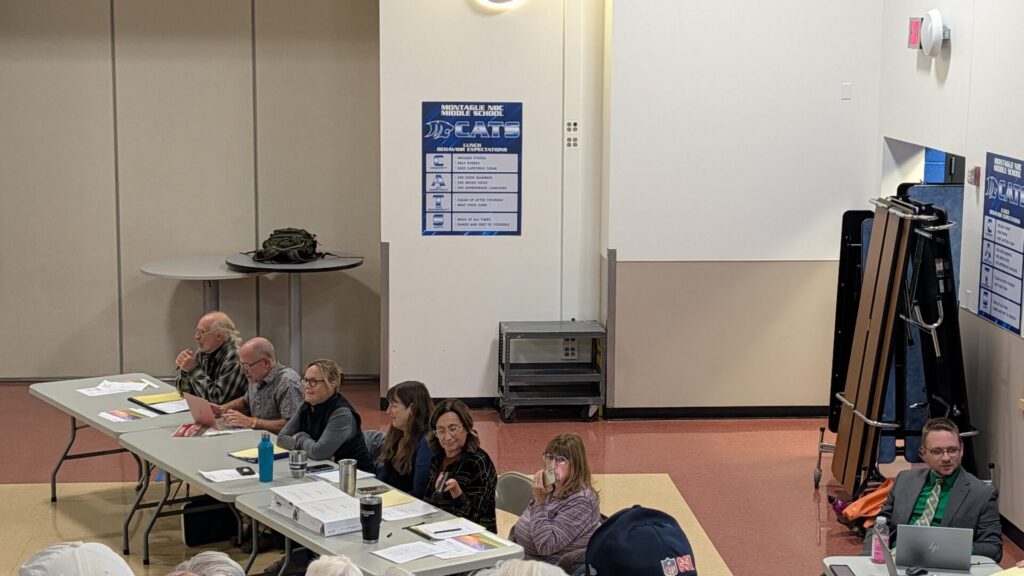
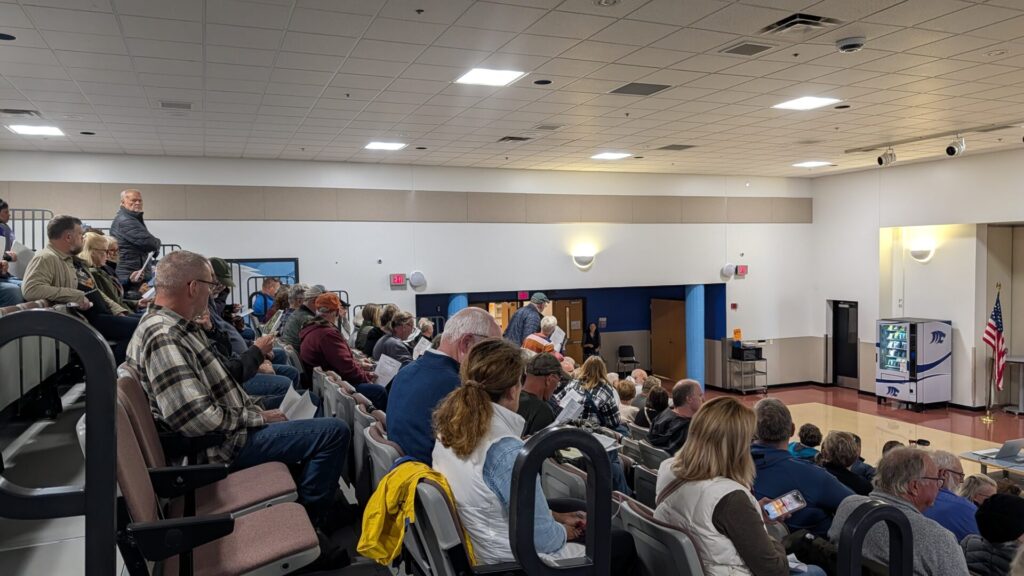
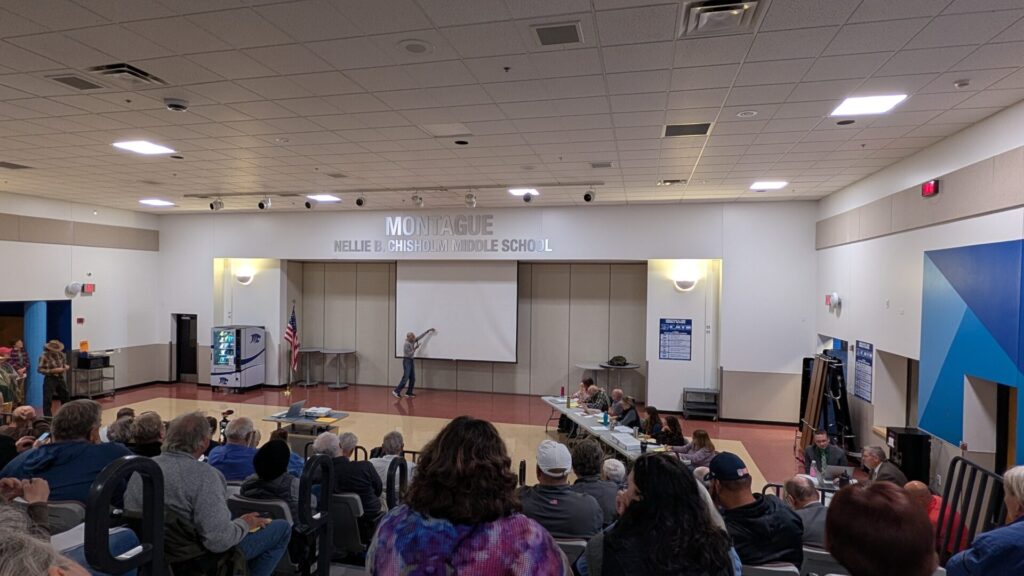
MONTAGUE, Mich. — Oct. 21, 2025. White River Township’s Planning Commission held a special meeting and public hearing Tuesday night at Montague Middle School to take public comment on a proposed utility-scale Lakeside Solar Project from Geronimo Power. The commission emphasized the session’s purpose was to listen; no vote was taken. Roughly 40 speakers—each limited to three minutes—voiced a mix of support, opposition, and recommendations..
Project overview from the developer
Amber Miller, director of permitting for Geronimo Power, presented the application. Geronimo Power—now operating as a Brookfield-owned company—said it controls 44 parcels totaling about 1,575 acres, with an estimated 982 acres inside the fenced array. The company is proposing a 150-megawatt project that would interconnect to the regional grid via the local transmission system.
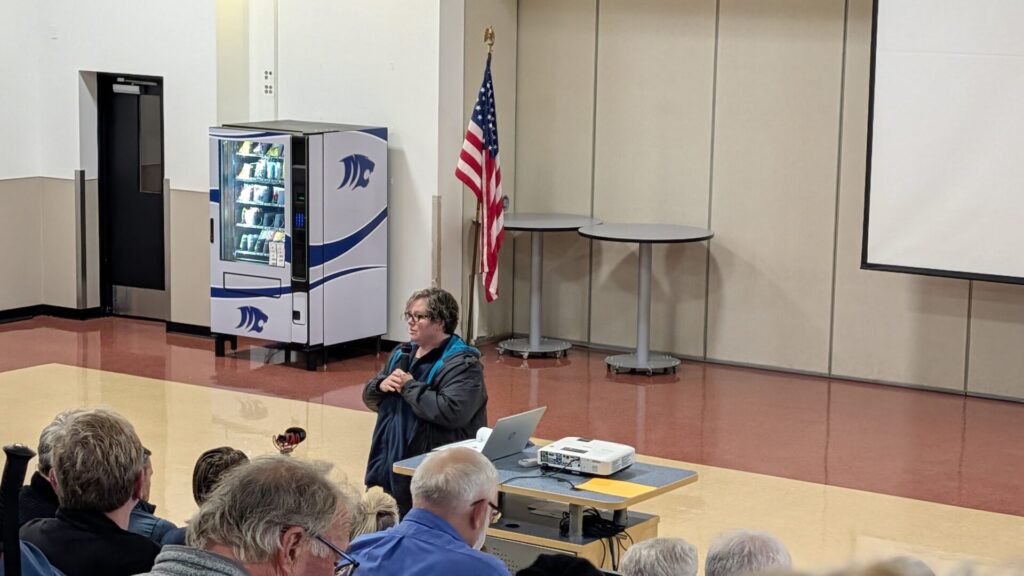
Miller said the company has executed grid-interconnection agreements, estimated about $40 million in local economic impact over 20 years (roughly $2 million annually), expects about 200 construction-phase jobs and three permanent operations jobs, and plans to seed a community charitable fund (stated at $750,000 over 20 years). She added that adjacent-landowner meetings are ongoing through late November and pointed residents to an online portal with maps and application materials.
On siting standards, Miller stated the project was designed to meet Michigan’s Public Act 233 requirements, including maximum height limits for panels, dark-sky lighting, fencing compliant with the National Electrical Code, sound limits measured at nearby homes, and defined setbacks from road rights-of-way and non-participating property lines.
The township received the special land use application on Sept. 16, 2025. By statute, the commission noted, a 120-day review window runs to Jan. 14, 2026. Commissioners reiterated that their detailed deliberations will happen at subsequent meetings.
Public comment: themes against and in favor
Most commenters opposed the project as filed, citing scale and location as the central issues. Supporters urged the commission to consider the project’s long-term tax base, farm income stability, and role in meeting rising electricity demand.
Concerns raised by opponents
- Size relative to the township: Repeatedly described as “too big,” the project’s footprint across multiple blocks of farmland drew sharp objections in a 15.8-square-mile, mixed rural-residential township. Several speakers said dozens of homes would border panels, with some surrounded on multiple sides.
- Consistency with local plans and zoning: Residents and local officials pointed to the township’s master plan goals (open space, pastoral character) and the township’s renewable energy overlay district on the DuPont/Chemours brownfield—about 500 acres—as their preferred solar location. Multiple speakers asked the developer to use brownfields “not farm fields.”
- Construction disruption: Many cited an 18–24 month buildout with heavy truck traffic, dust, diesel exhaust, and road safety concerns around school and commuter routes.
- Property values and marketability: Local real estate professionals and homeowners warned of a smaller buyer pool, longer days on market, and potential value impacts for homes adjacent to arrays.
- Agricultural loss and soil disturbance: Farmers and residents worried about removing prime soils from production, grading and drainage changes (including along the Pearson Drain), and whether land could be fully restored after decommissioning.
- Wildlife, views, and tourism: Commenters referenced sandhill cranes, eagles, wetlands, and proximity to critical dunes, arguing that sweeping arrays would alter scenic character that supports tourism and short-term rentals.
- Decommissioning and recycling: Several asked who would guarantee panel removal and site restoration costs decades from now and questioned recyclability of components.
- Local control vs. state law: Speakers criticized the state’s PA 233 pathway that allows developers to seek state-level permits if local rules are deemed incompatible, urging the township to defend its ordinance and overlay.
Some opponents proposed alternatives or conditions if the project advances: limit it to the overlay area or brownfields first; require robust, full-perimeter screening; consider phasing; or expand setbacks where homes are close.
Points raised by supporters
- Electric reliability and demand: A few speakers—citing rising load from industry, data centers, and electrification—argued that new, fast-to-build generation is needed and that utility-scale solar is among the quickest, least-cost options.
- Climate and environmental benefits: Supporters said utility-scale renewables reduce emissions compared with fossil generation and referenced evolving recycling options for panels.
- Farm economics and property rights: Participating landowners and renewable-energy veterans said lease income helps keep multi-generation farms intact, and that property owners should be able to choose solar as a land use within the law.
- Local revenue: Backers highlighted anticipated tax revenue for schools, emergency services, and local governments as a community benefit.
What happens next
After nearly two hours of comments, the commission closed the public hearing. Commissioners reiterated that they will evaluate the application against township standards and applicable state law at upcoming meetings before any recommendation to the Township Board. Residents were encouraged to continue submitting written comments for the record.
Key dates: Application filed Sept. 16, 2025; statutory review window through Jan. 14, 2026. No decision was made at Tuesday’s hearing.
Stay connected to what’s happening in our area by visiting CatchMark Community.