For many hunters in the White Lake area, late winter isn’t the end of deer season — it’s the beginning of a different kind of pursuit.
As snow begins to melt across fields and woodlots around Whitehall and Montague, eyes turn to the ground instead of the treetops. Shed season — the search for antlers bucks naturally drop after winter — is underway.
But for local hunters, it’s not just about finding bone in the brush. It’s about learning what the season ahead might hold.
Why This Matters Right Now
By February, many bucks have already shed their antlers, though some will carry them into early March. When testosterone levels drop after the rut, the antlers loosen and eventually fall away. What’s left behind is a snapshot of which bucks survived the season — and where they spent the winter.
For hunters who invest months into scouting, shed season answers an important question:
Which deer made it through?
That information shapes expectations for next fall long before summer trail cameras go back up.
Why Finding Sheds Isn’t Easy
It sounds simple enough — deer drop antlers, you go pick them up. In reality, it rarely works that way.
Rodents chew antlers for minerals, sometimes reducing a fresh shed to gnawed fragments in weeks. Snow cover can hide them. Leaf litter swallows them. And bucks don’t always drop both sides in the same place.
It’s common to find one antler and never locate its match. And when both halves are found together? That’s the kind of moment hunters remember.
Where Local Hunters Look
In the White Lake area, shed hunters often focus on three types of locations:
- Field edges where deer feed during winter
- Thick brush and bedding cover where bucks conserve energy
- Travel corridors between food and shelter
Late winter food sources matter. Agricultural edges, old apple trees, and winter browse can concentrate deer movement. When antlers are loose, pushing through brush or lowering their heads to feed can cause them to drop.
Those same areas also reveal something else: rubs, scrapes, and travel patterns that may not be as visible once spring growth returns.
More Than a Treasure Hunt
Shed hunting is also one of the few times hunters feel comfortable fully exploring the woods. During hunting season, too much intrusion can push deer out of an area. In late winter, the pressure is gone.
That makes shed season a form of offseason scouting.
It’s a chance to confirm bedding areas. To notice how deer moved during cold snaps. To see how habitat and food sources influenced patterns. Those observations often matter more than the antler itself.
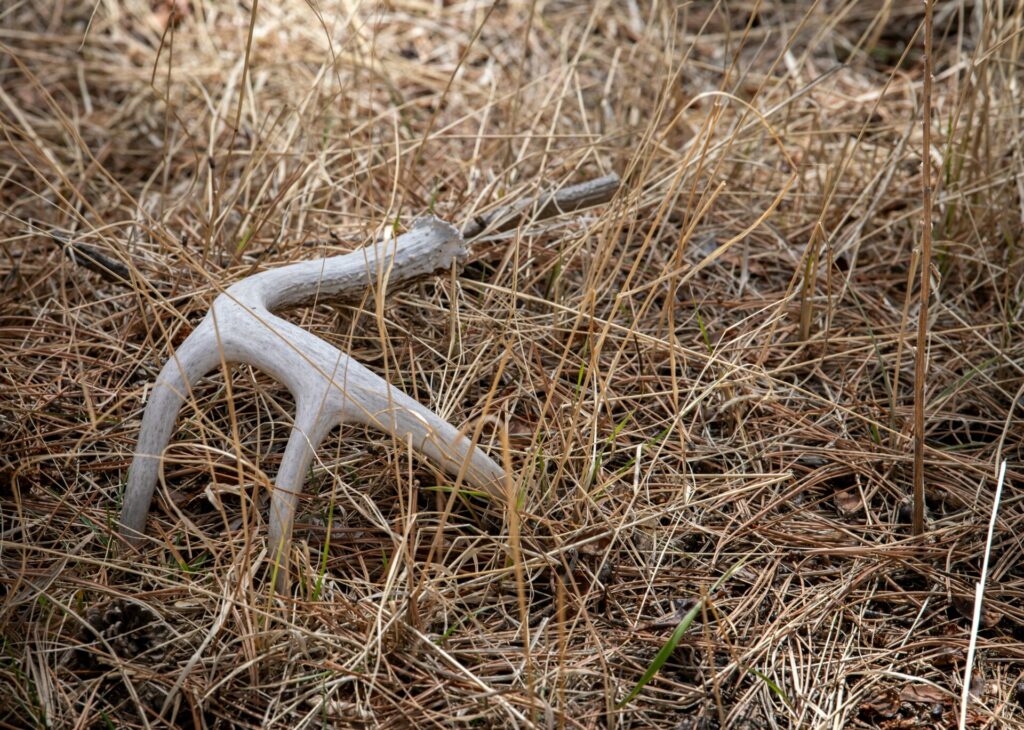
Photo by Jon Sailer on Unsplash
The Bigger Picture for West Michigan
In areas like Whitehall and Montague, where farmland meets woodlots and residential pockets, understanding deer movement is increasingly important. Deer numbers in parts of the Lower Peninsula remain a topic of discussion, and habitat continues to shift.
Shed season offers a quiet way to observe how deer are adapting — without a tag in your pocket.
What Happens Next
As snow continues to recede, more antlers will appear. Some will be fresh and bright. Others may already show the marks of rodents.
But the real takeaway isn’t how many sheds someone finds.
It’s what the landscape reveals before spring growth hides it again.
For hunters willing to put in the miles, shed season in the White Lake area isn’t just about bone on the ground. It’s about gathering clues for the season to come.
If you’ve been out shed hunting in the White Lake area this winter, what are you seeing? Are deer patterns shifting? Are certain areas holding more sign than others?
Share your observations or photos with CatchMark Community — because sometimes what you learn now shapes the season ahead.
Stay connected to what’s happening in our area by visiting CatchMark Community.
Powered by CatchMark Technologies — helping people, solving problems. Explore more on our website.