Each week, CatchMark Community features a Wild Animal Fact from Montague native Seth Simon, the creator of the popular bite-sized wildlife series. Seth is known for his upbeat personality, love of animals, and knack for turning fascinating facts into fun, 60-second reads. His goal is to spark curiosity, encourage conservation awareness, and bring a little joy to everyone who follows along. We’re proud to share his work and add a touch of “wild” to your week.
As part of this weekly feature, Seth brings his signature enthusiasm straight to our readers with a fresh creature spotlight—packed with quick facts, habitat insights, and the unique quirks that make each animal extraordinary. His posts combine education and entertainment in a way that’s accessible for all ages, making wildlife learning both fun and memorable. Enjoy this week’s feature below!
Hey  Wild Fact Fans, Seth here with the new Friday Feature creature. Don’t forget to please like
  , share and comment
  questions
  down below
  If you have any on this weeks animal ^^ or any creature you’d like me to do a post on in the future
Today marks a truly special occasion; as this feature creature post is the 200th animal ive posted about in these past 4 1/2 years. Its truly an honor, fun and privilege to share and do these posts to help and spread the knowledge on these amazing creatures ^^. lots of studying, research, and care goes into each these entertaining and interesting post for all to enjoy. And i hope alongside doing many more as time goes on ; i hope these posts will be enjoyed by many generations to come; to learn from this knowledge and its used to protect these beautiful, bizarre and fascinating animals we are lucky  to share this world
  we call home
  with.
with.
To continue, im proud to announce that This weeks feature creature is a strange, unique and tough bird that occupies the grasslands and woodlands of eastern Africa. The largest of the clan, these black birds work well together as the search the plains for food and grow their flocks numbers in a deadly environment of fierce predators.
This weeks feature creature & the 200th creature is the Southern Ground Hornbill
Next weeks feature creature: Southern Ground Hornbill
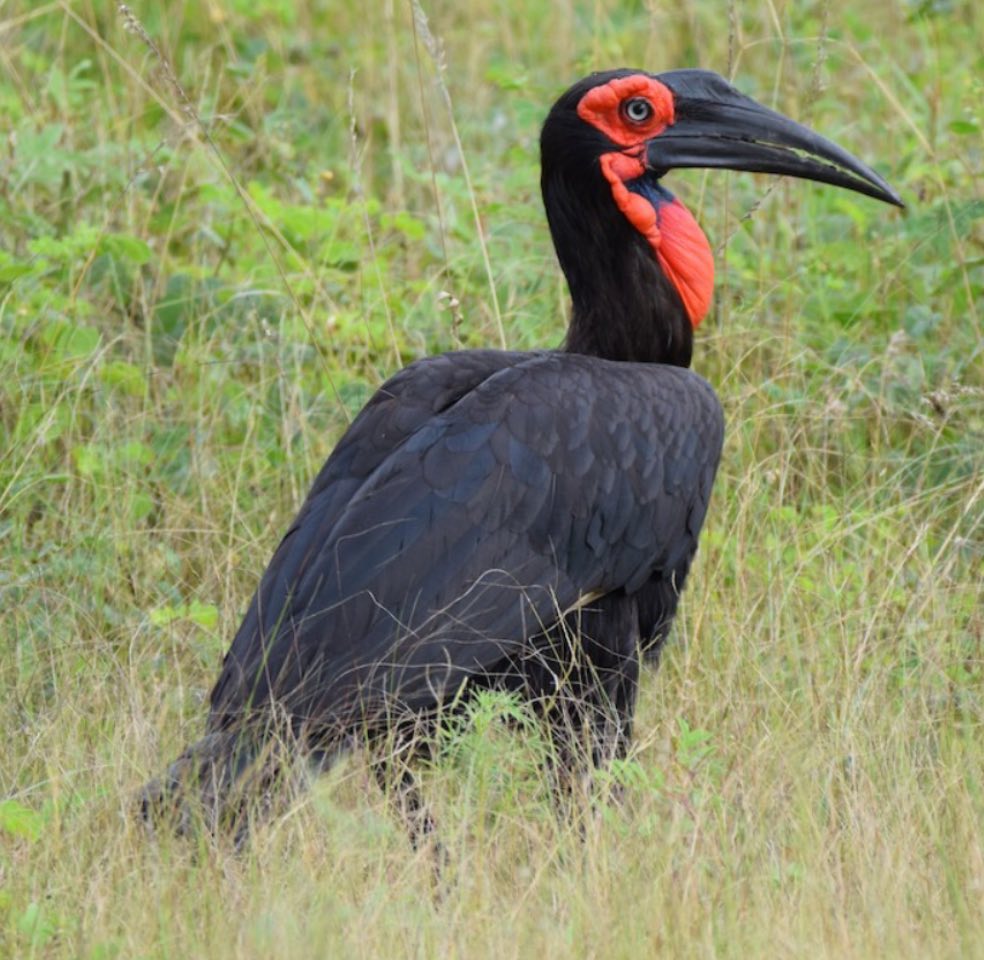
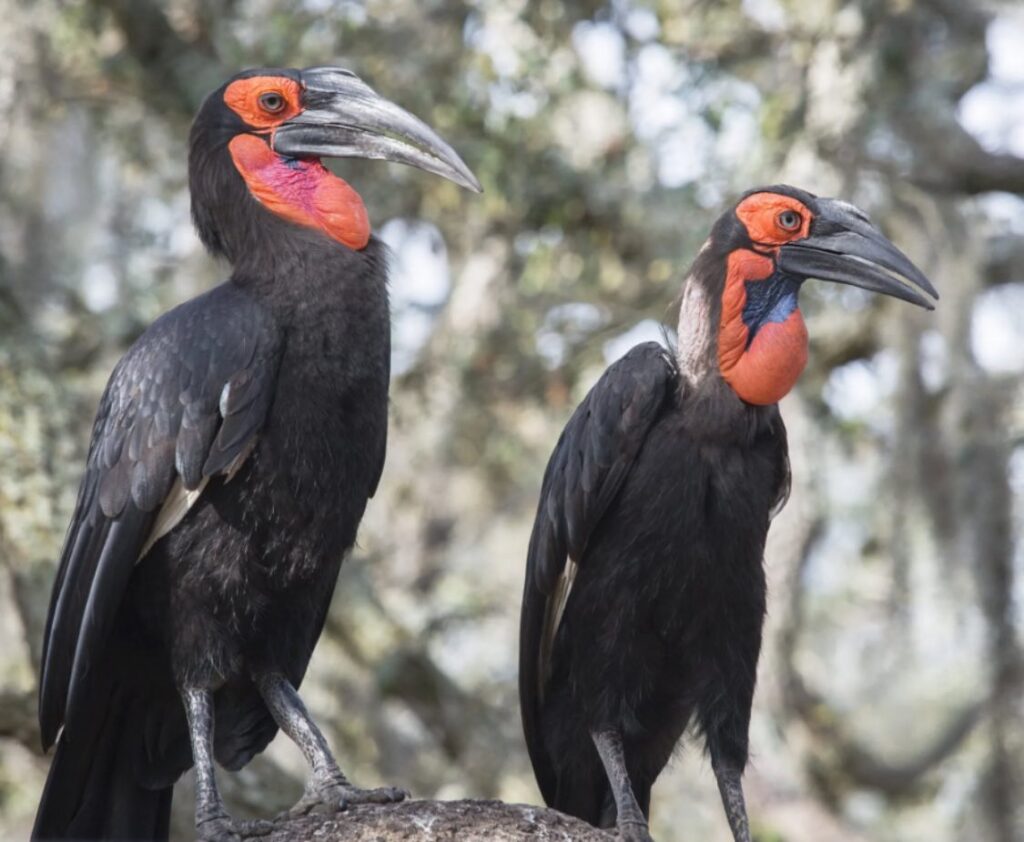
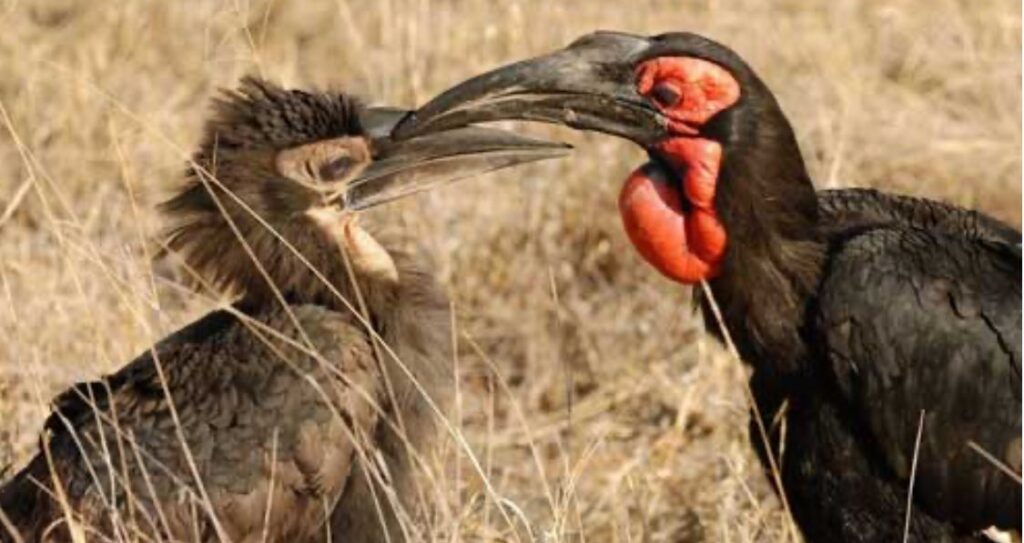
1. Measuring in at 3.5ft long, 3 to 4 ft tall, a wingspan of 4ft , and weigh in at 4 to 13 lbs (around the size and sorta looks like a turkey  ) ; the Southern Ground Hornbill is the largest & heaviest species of the 62 species of hornbills in the world
  (with only 2 being ground hornbills)
2. These birds have long lifespans ; living around 50 to 60 years in the wild !
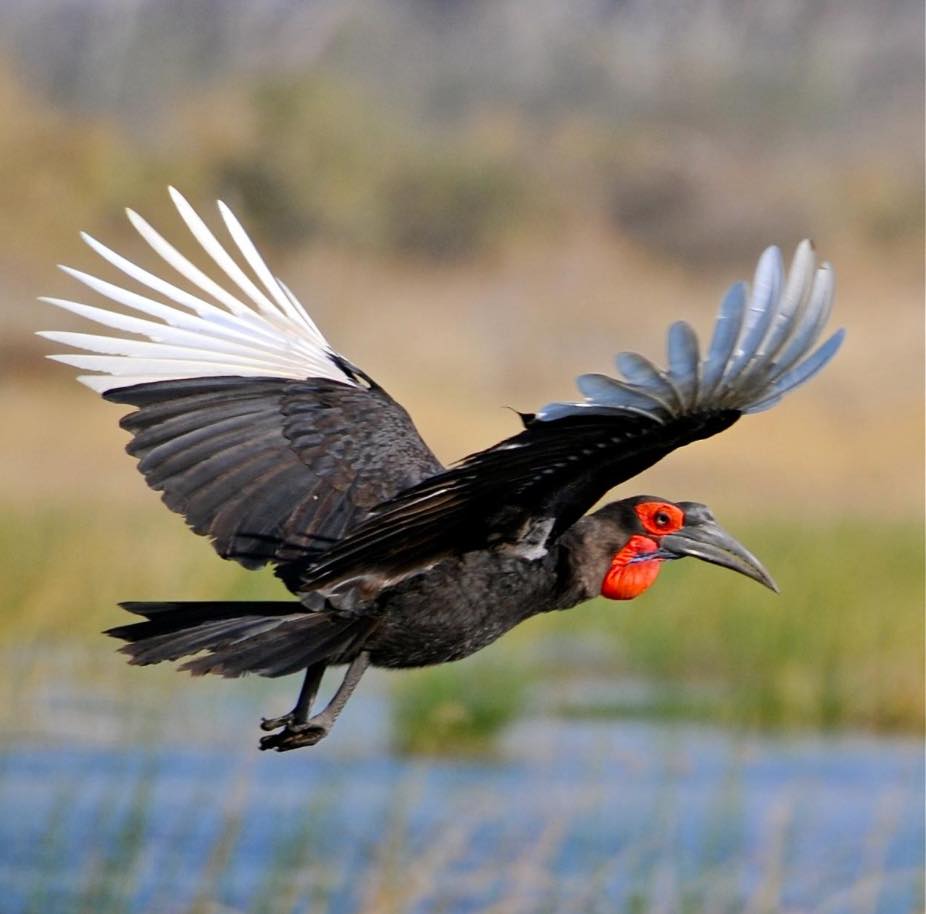
3. While they can fly with their large black with hints of white wings at speeds of 18mph in short bursts ; these birds  are more designed for a life on the ground. With large bodies and strong stocky legs
  ; they often travel
  up to 7 miles a day foraging for food across their 39 square mile territory
4. Flocks are usually made up of 5 to 11 individuals (1 female and the rest are males) which are lead by the largest dominant mated pair in the group. They’re very territorial and will fiercely defend it against intruders; even going after their own reflections in windows  !
!
5. Southern Ground Hornbills are very opportunistic omnivores who feed on a wide variety of food such as roots, fruits  , seeds , insects
  (even grabbing flying ones right out of the air!), snails
  , spiders
  , scorpions
  , eggs
  , small lizards
  , frogs
  , tortoises
  , birds , mice
  squirrels
  , hares
  , small monkeys
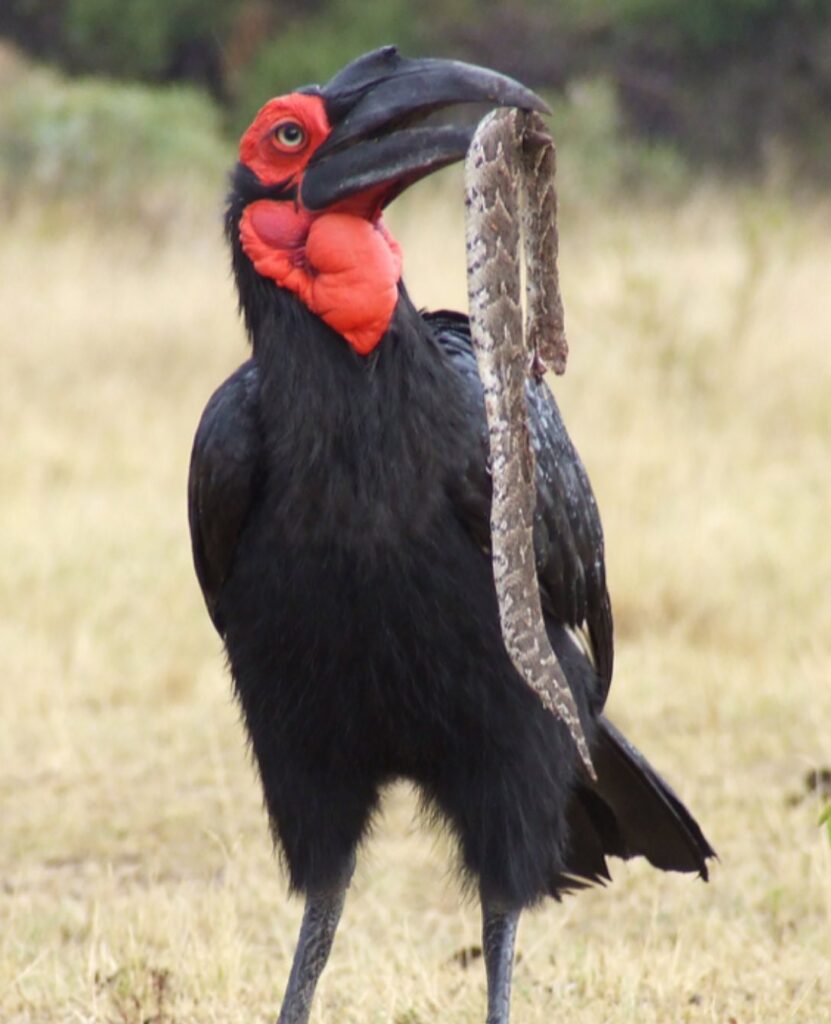
  , and even snakes as deadly as cobras
  & puff adders. They’ll even sometimes take on young eagles & other birds of prey
  !
!
6. By working as a team ; they can surround and mob prey & even steal food from other predatory birds by mobbing them with their sharp beaks! Outside of team hunting; they’re pretty social and friendly to one another. And for those concerned ; no worries as theres never been any sightings of these birds harming people 
7. Along with being aggressive; they’re very clever birds who often follow herds of herbivores like zebras  , wildebeest and gazelles as they graze; watching for small animals that flee from the feet of the passing grazers. They also check out wildfires
  for fleeing prey as well, which is a behavior seen in many savanna birds
8. These blue eyed birds have very keen eyesight  to spot small movement in the grass as they hunt for food. They also have long modified eyelash like feathers
  that help cut thru the sun’s glare
  & keep dirt out of their eyes
  when they dig
9. Their 6 to 8 inch long curved bill has many uses; not just for grabbing prey with great precision; but they use them to help dig alongside their sharp claws & strong legs . The Ground hornbills 1st 2 neck bones  (vertebrae) are fused together to add power and help with these tasks; even granting these birds with enough force to break thru a tortoise shell
  like a pick axe
  !
!
10. Despite their aggressive nature; they often take to the air and up into the trees  to escape dangerous threats like leopards
  , crocodiles
  Martial Eagles, & sometimes caracals & spotted hyenas. They often rest in trees at night
  to avoid the dangers that stalk the grasslands when the sun goes down
  . At dawn; they chorus together before heading out to feed.
11. Alongside males being bigger than females ; males are the only ones with the a distinctive solid red throat sac while the female has one with a blackish blue or violet patch on it
12. These throat sacs as a sound amplifier  to help communicate while foraging , to ward
  off intruders & for the mating season . They make their large booming calls by filling up their throat sacs & slowly release it
13. They can make their calls extra loud thanks to keratin crest called a Casque on the top of their bill (which is larger in males) which acts like an echo chamber. Their calls are often mistaken for a lions  roar and can be heard from 2 to 3 miles away!!
14. Only the dominant pair mates every 6 to 9 years . And after mating (between September to December), the breeding pair make permanent nests  in tree
  tops (sometimes rock faces) they line with leaves
  that the female will stay in until the eggs hatch
  . They’re among the only hornbills who dont seal the females in their nests
15. In the meantime while waiting for the eggs to hatch in a month or 45 days, the male & all the members of the flock help care for her by bringing her food. As they search  , they often lay their food out on the ground in a neat line when they spot something tasty
  to add to their haul. Once they have enough, they gather it all back up and head back home
  .
.
16. Females usually lay 2 to 3 Eggs at a time. ; sadly  ; usually only a single chick
  survives to adulthood. The chick remains in the nest for 3 months to keep safe from predators like eagles , genets , snakes , baboons , caracals , and leopards
17. Adolescent hornbills have browner feathers & a gray throat patch until they’re 4 years old. At 3 years old; females leave their family flock to start their own families while males stay in their original groups to help their parents & raise the next generations to come.
Next weeks feature Creature hint 
 : this lesser known and elusive canine of india
  is a main star
  in a classic novel and movie
  involving a young orphan boy of the jungle
Wild Animal Facts: Fishing Cat
Stay connected to what’s happening in our area by visiting CatchMark Community.
Powered by CatchMark Technologies — helping people, solving problems. Explore more on our website.