In this week’s Trivia Tuesday, we asked: Before the U.S. Coast Guard existed, what federal rescue organization operated at White Lake?
The answer is the United States Life-Saving Service.
But the more important question is this: Why did White Lake need one?
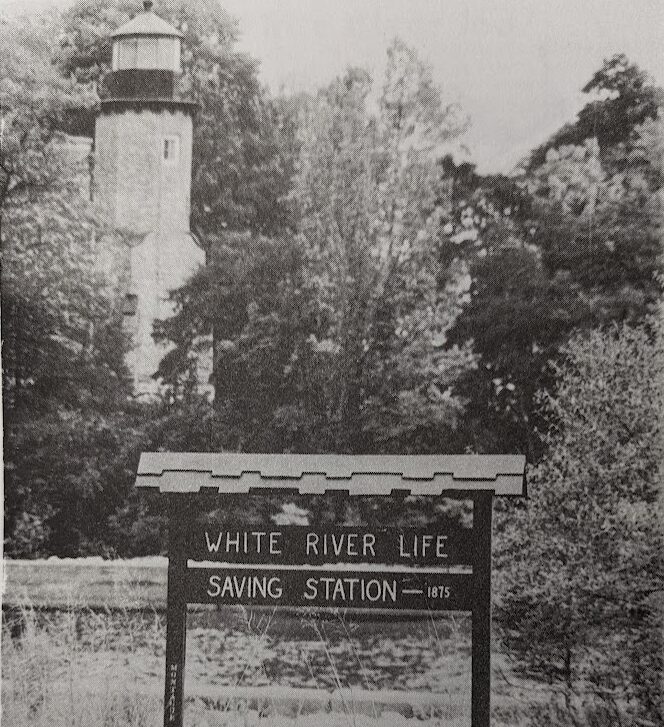
A Harbor That Demanded Protection
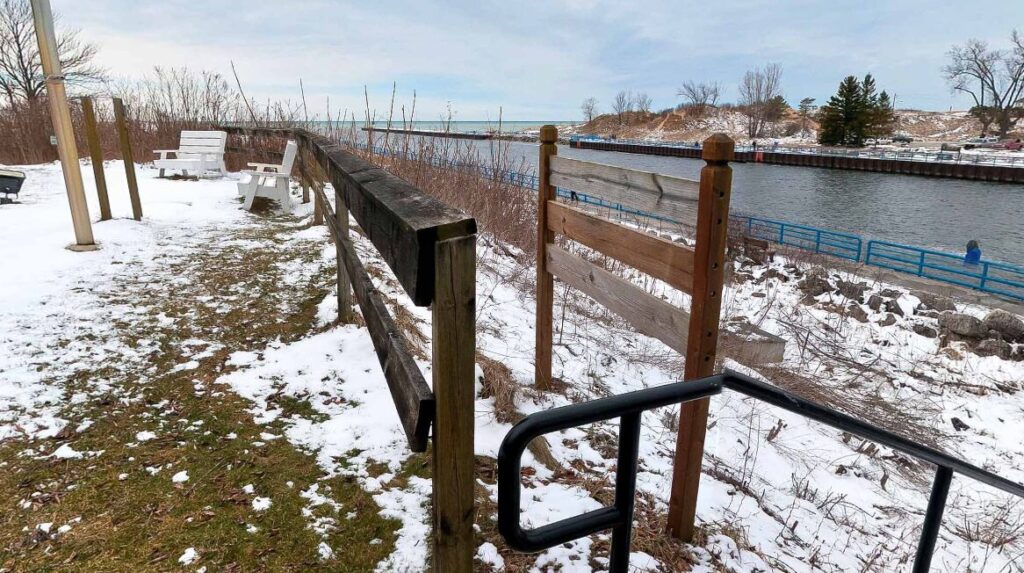
Today, the north pier is a place for walking, fishing, and watching sunsets. In the late 1800s, it was something far more intense.
White Lake was a working harbor. Lumber schooners and steamships regularly moved through the channel connecting Lake Michigan to inland mills. Storms rose quickly. Sandbars shifted unpredictably. Entering the harbor required timing and skill and sometimes luck.
Recognizing the danger, the federal government established the White Lake Life Saving Station shortly after 1875, positioning it near the north pier of the channel.
These stations were not placed randomly. They were built where maritime traffic, and maritime risk, justified them.
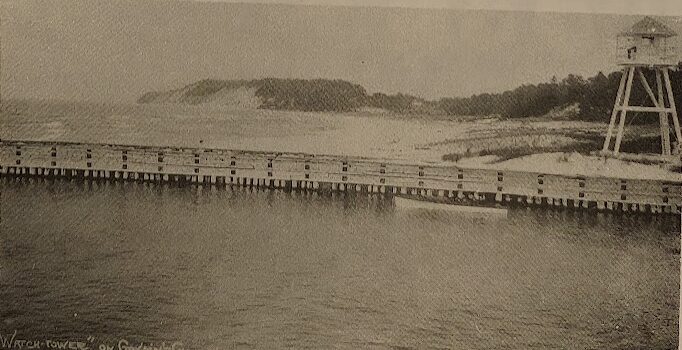
The Crew on Watch
The White Lake station was initially staffed by seven or eight men. The captain had living quarters at the station, and the crew slept there as well. As operations expanded, additional small houses were constructed near the pier.
The crew’s work was constant.
At night, they patrolled the shoreline north and south of the pier carrying lanterns. During storms, they launched heavy life-saving boats down an inclined runway built specifically to move vessels quickly from station to water.
Early boats were powered by oars alone. Later, inboard motors were introduced. An auxiliary boat house north of the south pier stored a large life-saving boat used when navigating out of the channel during rough weather became especially difficult.
This was physical, demanding rescue work long before radios, engines, or helicopters.
A Changing Shoreline
The south pier itself was designed as a double-decker structure, allowing safe access during heavy storms. A guiding light stood at the west end of the pier to assist vessels entering the channel.
In 1915, the station modernized its lighting system, transitioning from kerosene to electric lights at both the lighthouse and the pier. The same year the U.S. Life-Saving Service merged with the Revenue Cutter Service to form the modern United States Coast Guard.
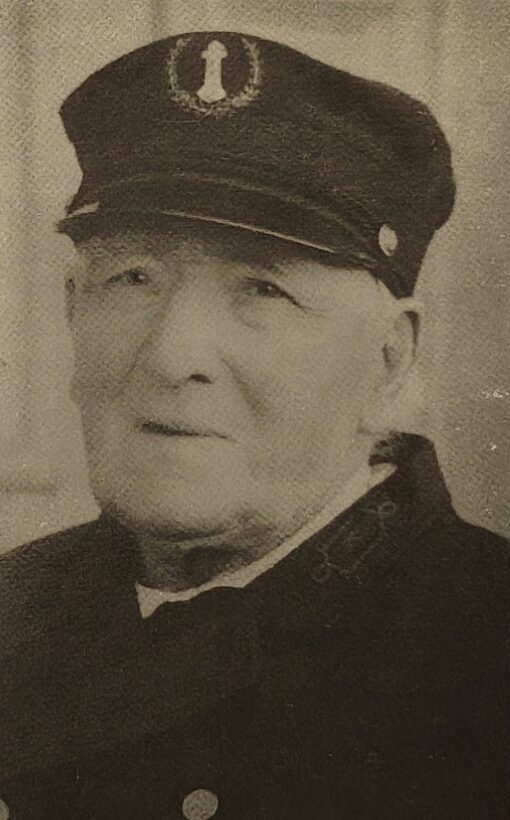
Captain William Robinson, the first lighthouse keeper, served from 1875 to 1915. He was succeeded by his son-in-law, William Bush, who served until the station closed in 1941.
Over time, the Coast Guard assumed operations, and eventually the property changed hands. The lighthouse was sold to Fruitland Township in 1946 and later became a museum. The former station property eventually became part of what is now Medbury Park.
What This Says About White Lake
The existence of a Life-Saving Station at White Lake tells us something that can be easy to forget.
This shoreline was once a high-traffic, high-risk maritime corridor. It was active enough, and dangerous enough, to warrant federal rescue infrastructure.
The quiet beach we see today was once a place where surf crews stood ready at a moment’s notice.
The Life-Saving Station wasn’t symbolic. It was necessary.
And that history still shapes how we understand White Lake. Not just as a place of recreation, but as a harbor built on vigilance, risk, and resilience.
Stay connected to what’s happening in our area by visiting CatchMark Community.
Powered by CatchMark Technologies — helping people, solving problems. Explore more on our website.