Hey Wild Fact Fans, Seth here with the new Friday Feature creature. Don’t forget to please like, share and comment questions down below If you have any on this weeks animal ^^
This weeks feature creature is a powerful cold blooded predator that stalks thru the jungles and waterways throughout southeast Asia. Similar to another fearsome group of reptiles ; this lizard  takes fierce to a new level ; as its kind (both its main species and genus group) lives on land just as much in the water
  . White sharp claws, a powerful whipping tail, and a venomous bite ; this is a creature few dare trifle with. And with it adapting to urban areas ; many in some regions should be advise to keep on guard. It doesnt wanna harm us, but if startled; it can be a natural force to be reckoned with.
This weeks feature creature is the Asian Water Monitor
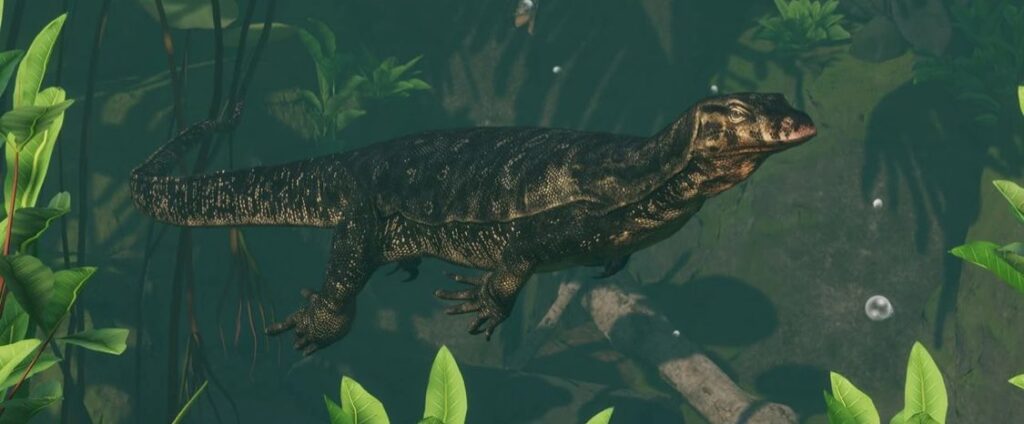
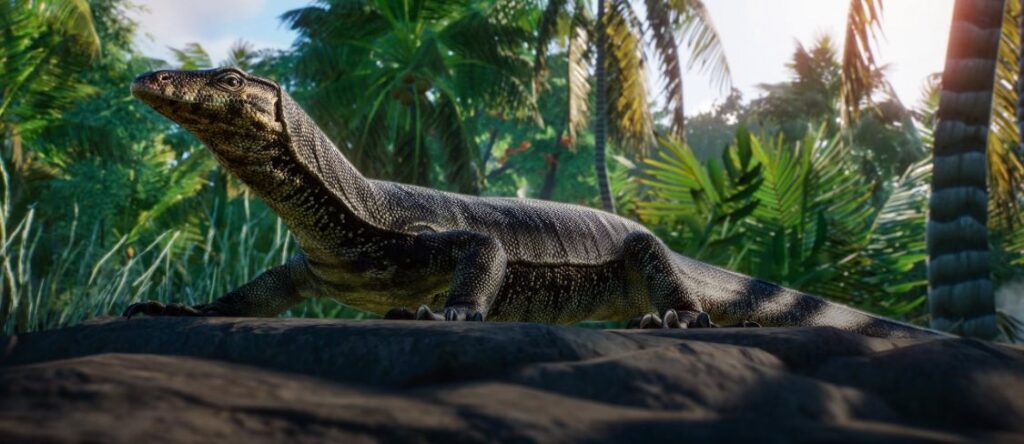
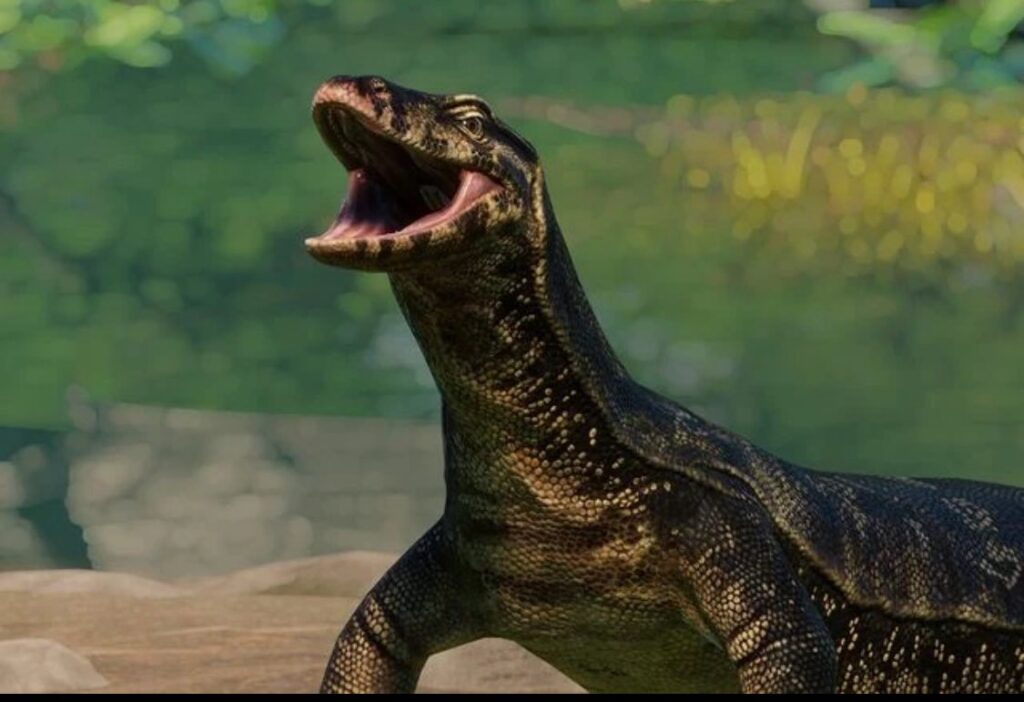
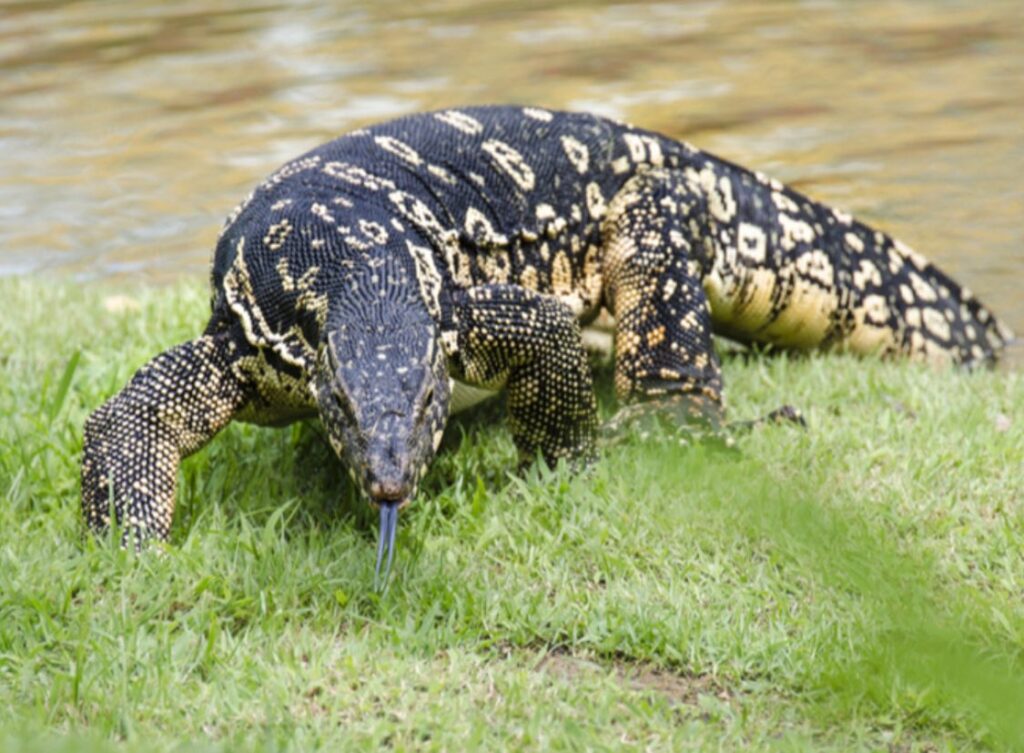
1. Measuring 5 to 6.6ft long, and weighing in at 11 to 110 lbs with most usually weighing 75lbs ; The Asian water monitor is the 2nd heaviest & 3rd largest lizard in the world  , second only to the Komodo Dragon
  . Theyre also known as the common as they can be found throughout many regions of southeast asia.
2. A top notch aquatic reptile, The Asian water monitor can hold its breath for up to 30 minutes; easily able to move thru the water (both fresh and saltwater) with its strong  arms, legs , and paddle like tail. They’ll attack animals on land just like crocodiles do; ambushing from the waters edge using their dark brown or black skin with yellow spots to help them blend into their surroundings
3. Along with being good in the water ; theyre great climbers  and diggers with sharp hooked claws perfect for digging, climbing , ripping into food and defending themselves. They can also run at 12 mph for long distances thanks to an effective breathing
  system.
4. Along with sharp serrated teeth and a powerful tail that can whip with enough force to break a dog’s  leg
leg 
 , these are powerful creatures to trifle with. Only top predators such as crocodiles
  , tigers
  , leopards
  , and pythons
  would make meals out of large adults. Birds of prey
  , King cobras , honey badgers
  , jackals, hyenas and larger monitor lizards prey on younger ones if they can catch em
5. Like all monitors , the asian water monitor is a carnivore that eats a wide variety of animals including , insects  , eggs
  , fish
  , crabs
  , frogs
  , small turtles
  , snakes including cobras , small crocodiles , birds
  , and mammals from rats
  to as big as monkeys
  and deer
  ! Theyre also top scavengers; sharing meals with dholes and even digging up graves
  !
!
6. Asian water monitors can dislocate the hyoid bone in their neck, so they can swallow large chunks of food without chewing like snakes can. They also use their forked tongues  to track down prey by smelling with their jacobson’s organ ; which picks up scent molecules from the air and gives that info to the brain
7. Also like most monitors; Asian water monitors have a very strong & mildly venomous bite. While the bite is reportedly very painful (strong enough to break bone ), the venom is not lethal to humans. The venom causes paralysis so the monitor can eat its prey easily.
8. Highly intelligent and adaptable; many Asian water monitors have become residents in urban areas such as Thailand  , India
  and Singapore
  ; living near canals and ponds. In some areas, they help control crab populations and remove deadly snakes in rice
  fields, which benefits local agriculture
  . Their scavenging also helps keep areas clean and lower the spread of disease
  too
too
9. Along with being solitary, Males are very territorial and will get into fierce battles with those who trespass in their territory; fighting tooth  and claw in tough wrestling matches. Their tough scales act as body armor during harsh battles; along with being immune to their own venom. But lots of battles do end with them walking away with wounds and injuries
10. Between April to October, males also fight for females in the breeding season. After a month to 45 days, females will lay a clutch of 10 to 40 eggs  in a burrow along a riverbank or in a termite mound before leaving them. After 6 to 7 months, the eggs will hatch
  , and the young will be on their own, independent from the moment their born; reaching full size in 2 years and living hopefully to around 11 years old.
11. Some Asian Water Monitors can be born leucistic and melanistic in color , but its pretty rare. Those that are black are nicknamed “Black Dragons”
Next week’s feature creature hint  : this Australian mammal looks like a cross between a porcupine and an anteater ; yet it lays eggs !