Hey Wild Fact Fans, Seth here with the new Friday Feature creature. Don’t forget to please like, share and comment questions down below If you have any on this weeks animal ^^
This weeks feature creature is a good example of how you dont have to be big to survive a big and deadly environment. Despite these canines small size, these pocket sized pooches are serious predators to even the largest mammals ; and able to cope with the amazons harsh competition and constant changing environment with rising and falling waters. Not much is known on this species of wild dog ; with their secretive behavior, and even more with its origins ; as fossils are hard to find in rainforests. But one things for sure ; these mini dogs may be tiny ; but they’re fiercly mighty!
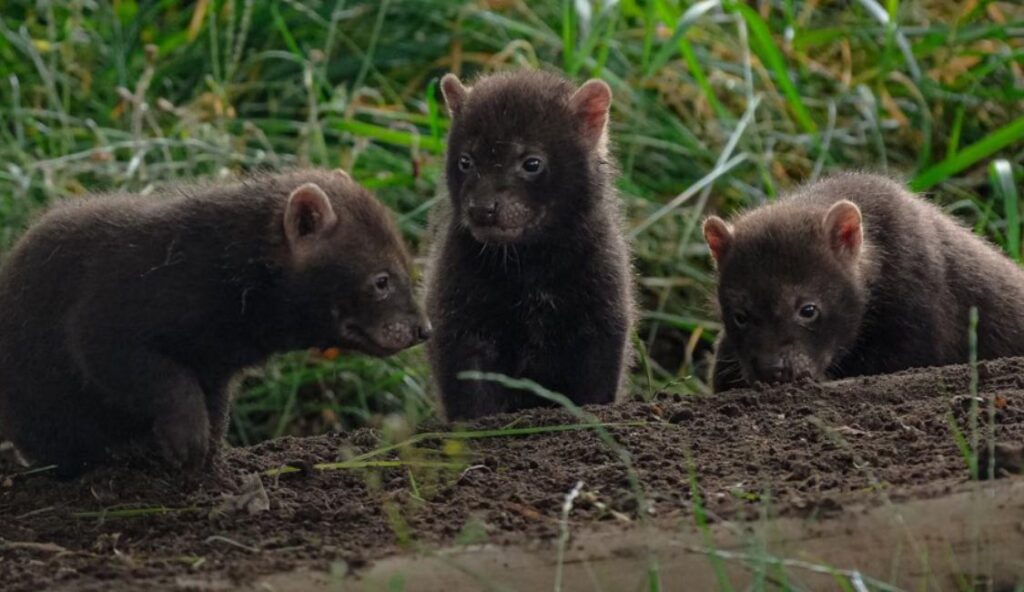
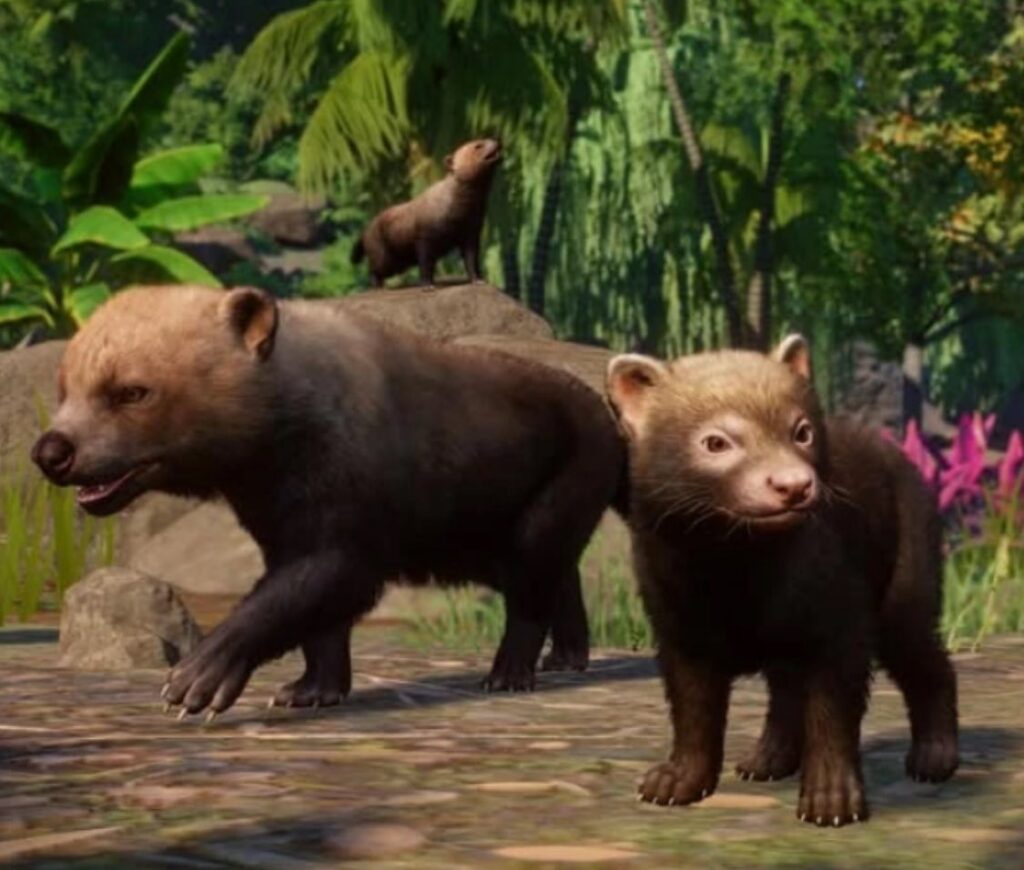
This weeks feature creature is the Bush Dog 
And this weeks feature creature event is:
World  Bush Dog
  Day (July 21st): an annual event held on July 21st to celebrate and raise awareness about bush dogs, which are small, elusive canids native to South America and help promote conversation and spread educational awareness on this amazing tiny canine. The day was established in honor of the conservation dog, Train, who played a significant role in bush dog conservation efforts by using his scent detection skills to locate fecal samples for DNA
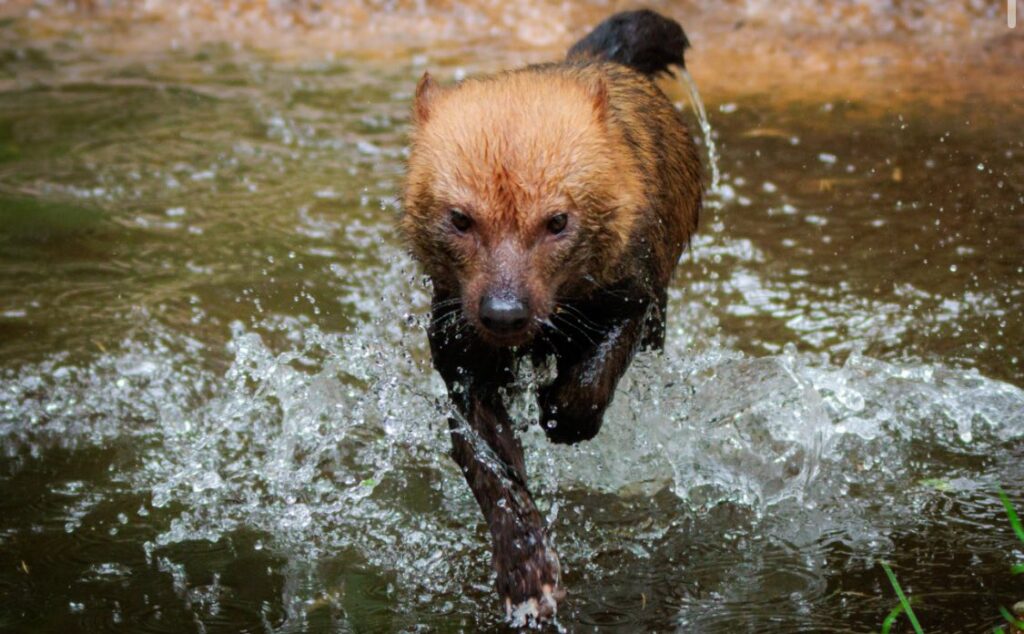
  testing.
1. Measuring in at 29 1/2 in long, standing 10 inches tall, and weighing in at 11 to 15 lbs (around the size of a house cat  or a terrier !); Bush Dogs are the smallest wild canine in South America , and is the smallest pack-hunting canine in the world !
2. .The bush dog is also known as the vinegar dog because its unique scent has been likened to vinegar.
3. The bush dog is an elusive species & has only become more widely known to the public in the past 30 years. Most info we have on this species ,comes Anecdotal evidence from native people info from found scat  , and bush dogs in captivity are the best sources of information on this species wild behavior & ecology.
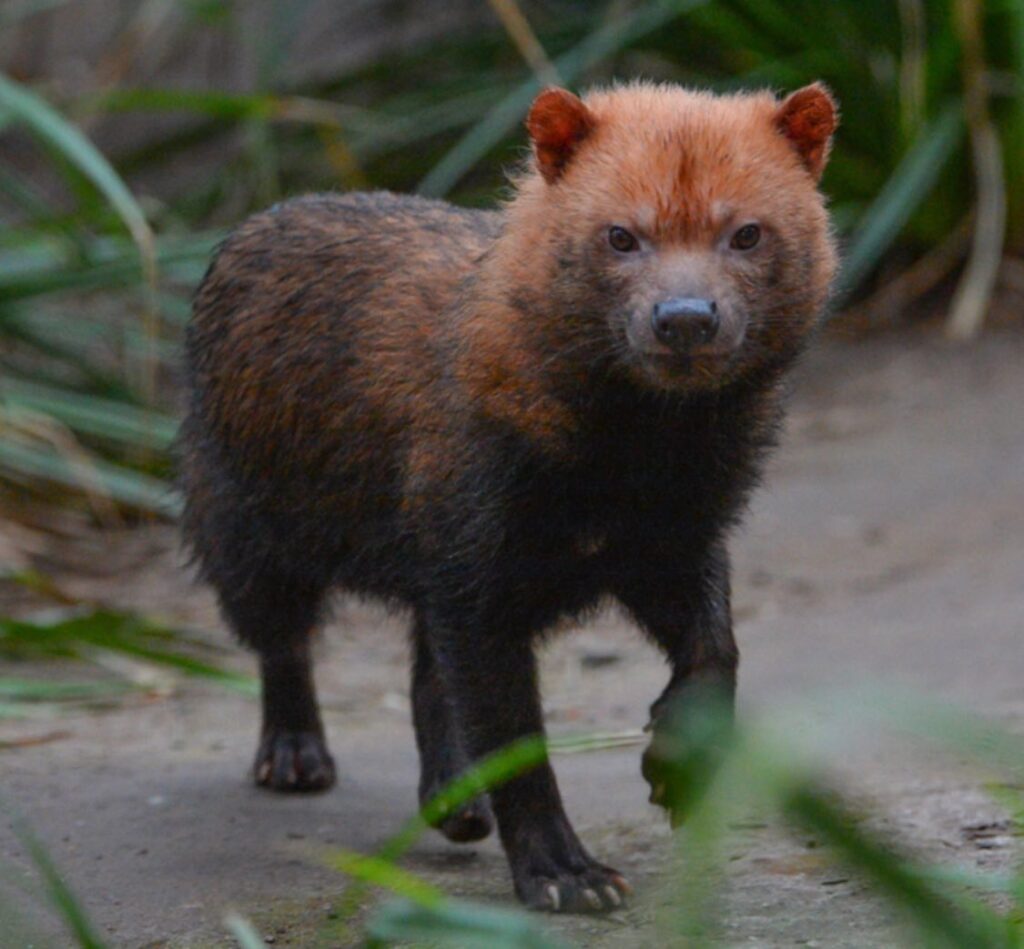
4. The reddish coloring of Bush dogs may be the reason for their other nickname, which is ‘zorro’, meaning fox  despite not being related to them. Hard to believe; but the Bush Dogs closest living relative; is the tallest wild canine in the world ; the Maned Wolf
  !
!
5. Bush dogs are more strictly carnivorous than other canids, which has this species occupy a similar niche to cats as hyper-carnivores. Their main prey includes small snakes  , lizards
  , small birds
  , peccaries, small deer
  , armadillos , capybaras, pacas , agoutis , and even prey as large as Rheas and Tapirs! Despite their strict 90% meat
  diet; they’ll eat fruits like bananas
  and papayas in some areas too.
6. Bush dogs are excellent swimmers; Thanks mainly to partially webbed feet. They love hanging out and cooling off in water on hot  days ; and packs chase their prey into the water
  and then surround them as part of their main hunting strategy.
7. They have a distinctive whining call they use to communicate with each other . They surround their prey and then chase it down, nipping at their legs with their powerful jaws ; soon weakening their target  enough to bring it down.
8. Bush dogs mainly make their homes in hollow logs and old animal burrows mainly. Around grasslands , swamps and pretty much any habitat with good plant cover and plenty of water ; living in packs of up to a dozen in a territory 3 miles in size.
9. Only the dominant pair in the pack is allowed to breed. After a pregnancy of 2 months to 83 days; the female will give birth to a single pup to 6 pups. Deaf and blind ; they stay with their mother for 4 weeks in the den; as the pack brings back food to her. It’ll take 8 weeks till the pups are old enough to go hunting with the adults
10. Despite being apex predators; they need to keep on guard when alone of possibility jaguars  , pumas ,anacondas , caimans
  and harpy eagles
  might come after them.
11. Bush dogs are classified as “Near Threatened” due to habitat loss and fragmentation, poaching, domestic dogs being a threat, and diseases. It is thought that bush dog numbers have decreased by 20% to 25% in the past 12 years, but due to their elusiveness, they are hard for conservationists to track.
12. Protection measures for bush dogs include hunting bans, though they are difficult to enforce, and environmental corridors to connect fragmented habitats and populations.
Next weeks feature creature hint 
 : this critically endangered hoofed desert
  animal is the largest of its kind.