MONTAGUE — The future of one of the White Lake area’s most significant environmental cleanup projects remains under review, and community members recently had an opportunity to learn more about the options being considered and the questions that remain unanswered.
Residents gathered June 11 at Montague Middle School for a public meeting hosted by the Chemours Environmental Impact Committee (CEIC), where representatives from the Michigan Department of Environment, Great Lakes, and Energy (EGLE) explained the current stage of the cleanup process for the Chemours Montague site.

The presentation offered a detailed look at how state regulators evaluate cleanup proposals and what comes next as Chemours responds to questions raised by EGLE about proposed corrective measures for the property.
While much of the discussion involved technical reports, groundwater monitoring and environmental regulations, the decisions made during the coming months could influence how contamination at the site is managed for decades and help determine what portions of the property may ultimately be used for in the future.


A Site Shaped by Industrial History
The former manufacturing site operated for decades along White Lake and included the production of materials such as neoprene, acetylene and Freon. Historical industrial operations left contamination in soil, groundwater and several waste management areas across the property.
Today, much of the 1,300-acre site consists of forested land, wetlands and shoreline habitat. Cleanup efforts have been ongoing for years, with groundwater treatment systems, environmental monitoring and restoration projects already in place.
The property’s size, environmental significance and proximity to White Lake have made it a continuing focus for local residents, conservation organizations and regulatory agencies.

Where the Cleanup Process Stands
According to EGLE officials, the site is currently in the Corrective Measures Study phase of the state’s corrective action process.
The study evaluates potential remedies for remaining contaminated areas and serves as a bridge between site investigations and final cleanup decisions.
EGLE representatives explained that Chemours submitted its Corrective Measures Study in late 2025. The agency reviewed the document and issued comments earlier this year, requesting additional information and clarification in several areas.
Chemours is expected to respond to those comments before regulators determine whether the proposed remedies satisfy environmental requirements.
If approved, the next step would involve development of a Corrective Measures Implementation Plan, which would provide more detailed information about how selected remedies would be carried out.

Proposed Remedies Range from Removal to Long-Term Management
Several cleanup strategies are being evaluated across different portions of the site.
Options discussed during the presentation include continued groundwater treatment, long-term monitoring, engineered caps over waste disposal areas, off-site disposal of certain materials, surface waste removal and legal land-use restrictions known as deed restrictions.
EGLE officials noted that different areas of the property present different challenges, meaning cleanup approaches may vary depending on the location and type of contamination involved.
One topic discussed extensively was the use of deed restrictions and other institutional controls. These tools are designed to prevent future exposure to contamination by limiting certain activities, such as residential development or groundwater use, in affected areas.
According to EGLE, such restrictions are commonly used at environmental cleanup sites when contamination remains in place but is being managed through engineering controls and long-term monitoring.

Groundwater Continues to Drive Discussion
Much of the meeting focused on groundwater contamination and the systems currently used to manage it.
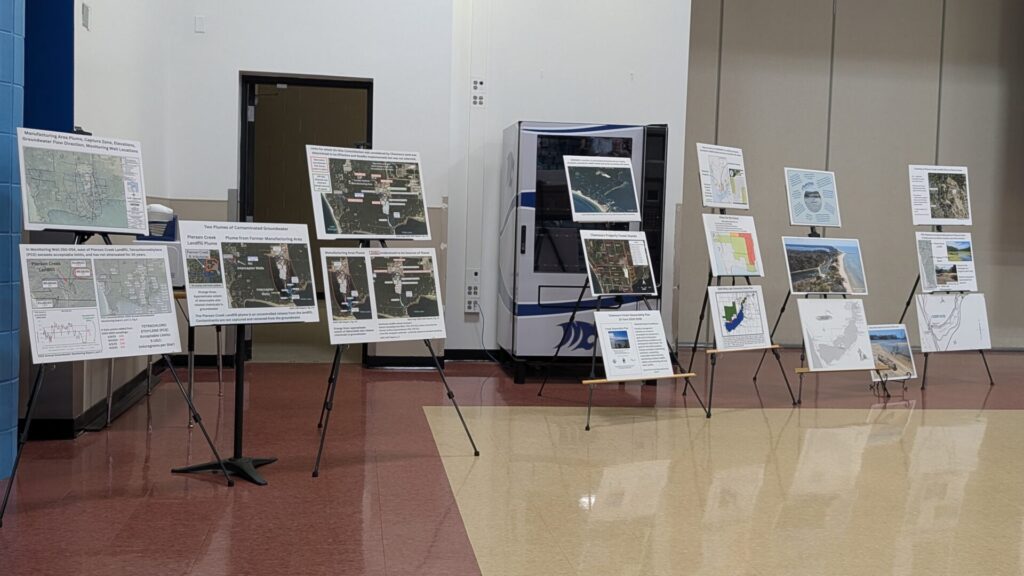
Maps presented during the meeting showed groundwater contamination plumes associated with the former manufacturing area and the Pierson Creek Landfill.

The larger plume near the former manufacturing area is managed through a pump-and-treat system that captures contaminated groundwater before it reaches White Lake. Water collected by the system is treated before being discharged through a permitted outfall.
EGLE representatives also discussed ongoing monitoring efforts and additional data collection being requested in some areas to better understand groundwater conditions.
The agency’s review includes evaluation of contamination both on and off the property, as well as potential pathways through which contaminants could affect people or the environment.



Community Group Calls for More Aggressive Cleanup
Following EGLE’s presentation, members of CEIC outlined concerns about several of the proposed remedies and presented information they believe supports a more aggressive approach in certain areas.
Particular attention was given to the Pierson Creek Landfill, where committee members highlighted groundwater contamination that continues to be detected in monitoring wells.

CEIC representatives questioned whether long-term monitoring, engineered caps and institutional controls would adequately address contamination near Pierson Creek and downstream waterways.
The group also expressed concern about potential impacts to restoration efforts involving nearby Sadony Bayou, a waterway that local organizations have been working to study and improve.

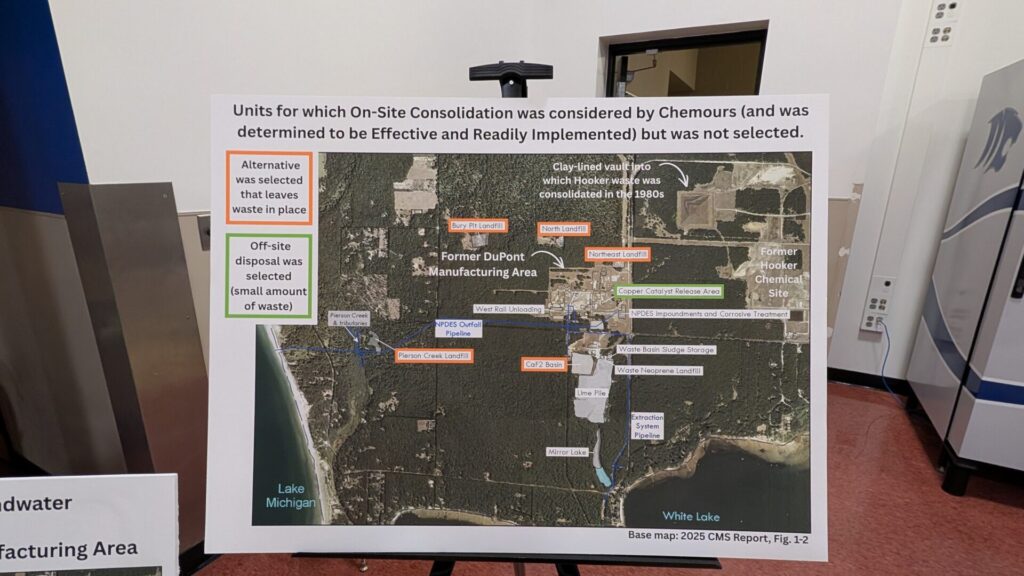
Throughout the presentation, CEIC members emphasized their support for removing and consolidating certain waste materials rather than leaving them in place under engineered controls.
The committee argued that removing contamination sources could reduce long-term monitoring needs and provide greater certainty for future generations.
More Than a Cleanup Project
Beyond the technical discussions, the meeting reflected the community’s long-standing connection to the property and surrounding waterways.
Display boards throughout the room featured historical photographs, maps and memories of White Lake, Pierson Creek and Sadony Bayou. Residents shared stories of fishing, boating, hunting and wildlife observation in areas that have become part of the broader environmental conversation surrounding the site.

For many attendees, the discussion was not only about contamination levels and engineering solutions but also about the future of a landscape that has been part of the White Lake area’s identity for generations.
What Happens Next
No final cleanup decisions have been made.
EGLE will continue reviewing Chemours’ responses to agency comments before determining whether proposed remedies meet state and federal requirements. Additional public participation opportunities are expected as the process moves forward.
For residents, the meeting served as a reminder that while significant work has already been completed, important decisions still lie ahead.
Those decisions will help shape not only how contamination is managed, but also what the future may hold for one of the region’s largest and most closely watched environmental sites.

Follow along on social media for daily updates, community highlights, and moments that happen between the headlines.
Facebook • Instagram • YouTube • TikTok • LinkedIn • X
Stay connected to what’s happening in our area by visiting CatchMark Community.
Powered by CatchMark Technologies — helping people, solving problems. Explore more on our website.