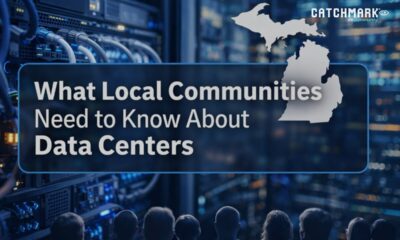
Montague — On the evening of March 12, Montague Middle School became the hub for a conversation that may shape the future of the area’s industrial landscape. Sarah Mills, Director of the Center for EmPowering Communities and a professor of practice at the University of Michigan, spoke to a room full of local township and city representatives about data centers and what these facilities mean for communities like ours.

The event, organized by Bob Muzio, Montague Township Planning Commission Chairperson, drew attention because data centers are not just about technology. “Every land use has a positive and negative impact at the local level,” Mills explained, “but this is also an opportunity for communities to have a conversation about what they want their future to look like.”
Why It Matters
Data centers are the backbone of today’s digital economy, hosting servers that power everything from credit card transactions to artificial intelligence. Recent interest in Michigan, driven in part by new tax incentives for large-scale facilities, has raised questions about electricity, water, zoning, and community impact.
Mills emphasized that these discussions are not just about hosting data centers. They are about local governments understanding the choices ahead, protecting quality of life, and planning proactively.
Impact on Our Communities
The conversation highlighted the tangible and less visible effects of data centers:
- Energy Use: Facilities require enormous amounts of power, but local impact depends on how the utility system is managed. Michigan’s regulatory framework ensures large users like data centers pay their fair share.
- Water Considerations: Some data centers need water for cooling, raising questions about municipal water capacity and long-term planning.
- Economic Opportunities: While large-scale, permanent jobs may be limited, property taxes and one-time community contributions can fund local projects, from fire departments to farmland preservation.
- Zoning and Quality of Life: Noise, light, and construction impacts require careful consideration. Mills encouraged communities to integrate regulations for sound, lighting, and decommissioning into their industrial zoning plans, ensuring consistent, fair treatment of all land uses.
A Conversation, Not a Decision
Mills’ presentation underscored that this is not about telling communities what to do. Rather, it’s about equipping local leaders with knowledge so they can make informed choices. Her guidebook and expertise provide a framework for evaluating industrial zones, understanding potential impacts, and thinking about long-term sustainability.
Representatives from local townships and cities left with a clearer picture of the complexities involved and, more importantly, a renewed sense of engagement. “This isn’t just about data centers,” Mills said. “It’s about having a conversation about what your community values and how you want it to grow.”
Looking Ahead
The March 12 event is just one step in a larger effort to prepare local governments for technological and industrial change. Residents can continue learning and engaging at a presentation hosted by the White Lake Area Climate Action Council on Tuesday, March 24, from 5:30 to 6:45 p.m. at the White Lake Community Library. This session is designed to build understanding of data centers and help the community participate knowledgeably in local and state decision-making.

In a world where technology moves quickly, local leaders are making sure their communities aren’t left behind by asking questions, exploring options, and shaping a future that balances growth with the values residents hold dear.
What Michigan Local Governments Should Know About Data Centers Guidebook
Click here for more information on Sarah Mills.
Stay connected to what’s happening in our area by visiting CatchMark Community.
Powered by CatchMark Technologies — helping people, solving problems. Explore more on our website.