Longtime residents of the White Lake area often say the same thing when winter arrives: “It used to snow a lot more than this.” While every winter is different, historical records and lived experience in Whitehall and Montague show that snow accumulation along the White Lake shoreline was once deeper, more persistent, and more disruptive than what many residents experience today.
Lake-Effect Snow Along White Lake
Whitehall and Montague sit in a prime location for lake-effect snow, shaped by Lake Michigan, White Lake, and prevailing winter winds. For much of the late 19th and 20th centuries, cold air passing over open water regularly produced frequent, heavy snowfall events that blanketed the area for weeks at a time.
Snow didn’t just fall — it stayed. Extended cold periods kept snowpack on the ground throughout much of the winter, with layers building on top of one another from December through February.
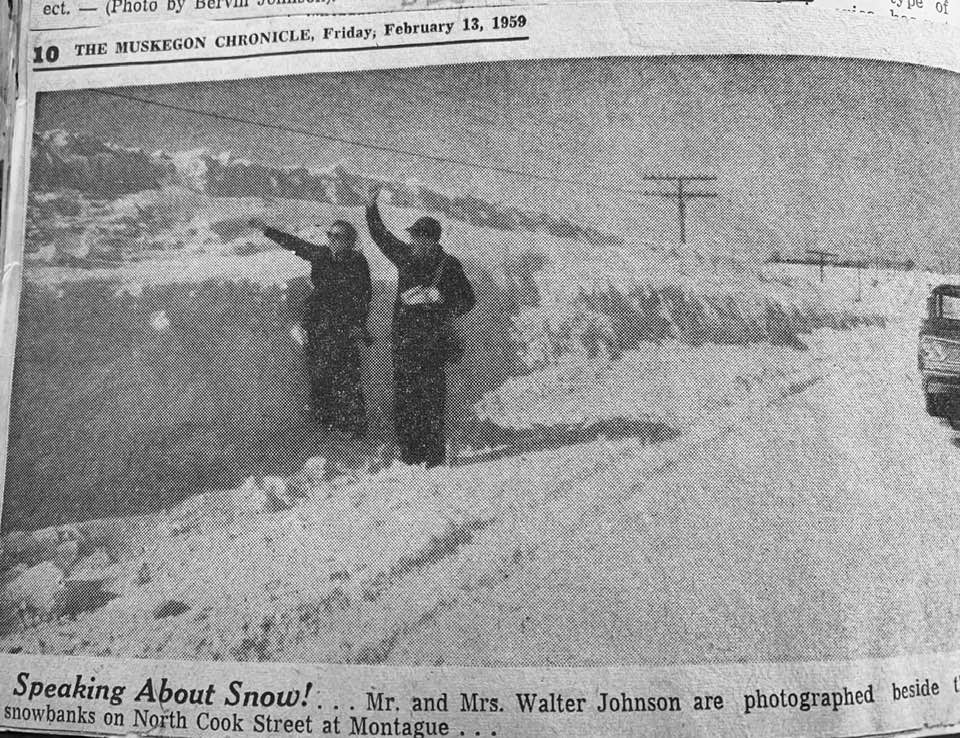
Photo courtesy of Remembering White Lake History
Snow Accumulation in Daily Life
Before modern snow removal equipment, heavy snowfall had a noticeable impact on everyday life in Whitehall and Montague. Streets were often narrowed by packed snowbanks, sidewalks disappeared entirely, and paths were carved by foot traffic rather than plows.
Residents relied on shovels, sleds, and community effort to keep walkways open. Snowdrifts could reach fence height in exposed areas, especially near open fields and along roads influenced by wind off the lake. Clearing snow was not a one-time task — it was a regular part of winter living.
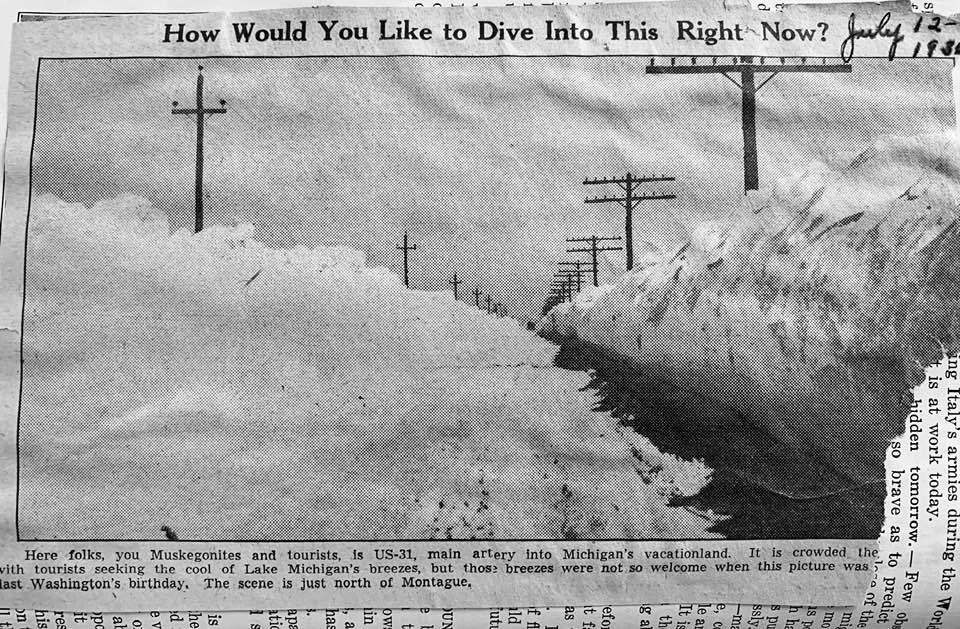
Photo courtesy of Remembering White Lake History
Transportation and Snow Challenges
Deep snow regularly affected transportation. Before widespread use of automobiles, winter travel by foot, sleigh, or wagon was common. Later, as cars became more common, snowfall still dictated movement. Roads could become impassable for days following large storms, especially before consistent plowing schedules were established.
School attendance, work schedules, and deliveries were often shaped by snowfall depth and frequency. Winter conditions were accepted as a natural limitation rather than an interruption.
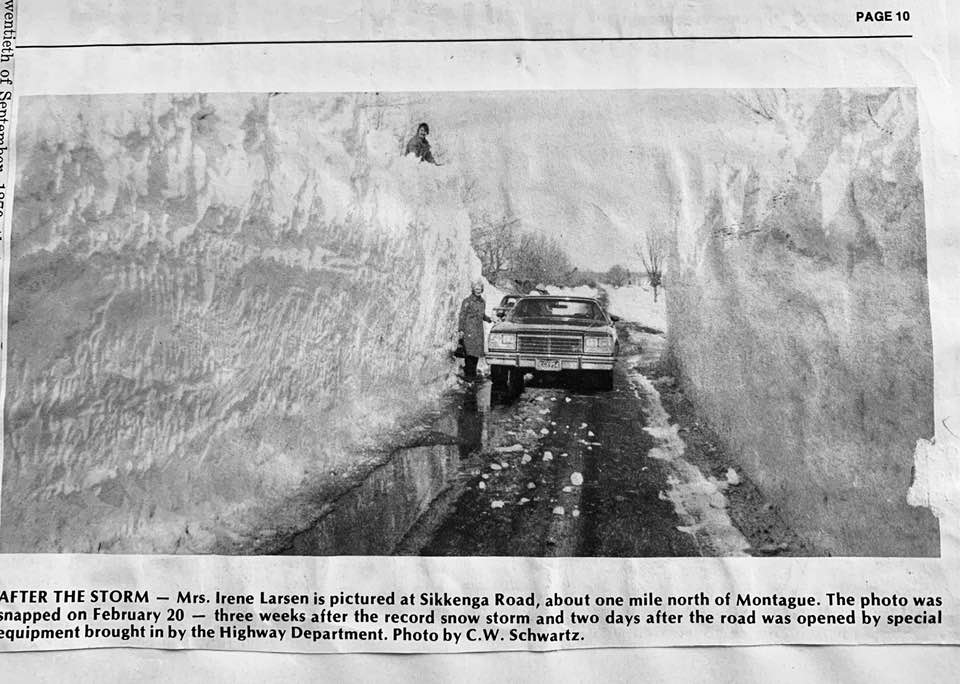
Photo courtesy of Remembering White Lake History
Comparing Past and Present Winters
While heavy snow still occurs in the White Lake area, long-term trends show fewer prolonged periods of deep, continuous snow cover compared to earlier decades. Residents recall winters when snowbanks remained until spring thaw and when clearing roofs, windows, and doorways was routine.
Today’s winters tend to include more frequent thaw-and-freeze cycles, reducing how long snow accumulates before melting or compacting. The result is often less total snow on the ground at one time, even when seasonal snowfall totals remain significant.
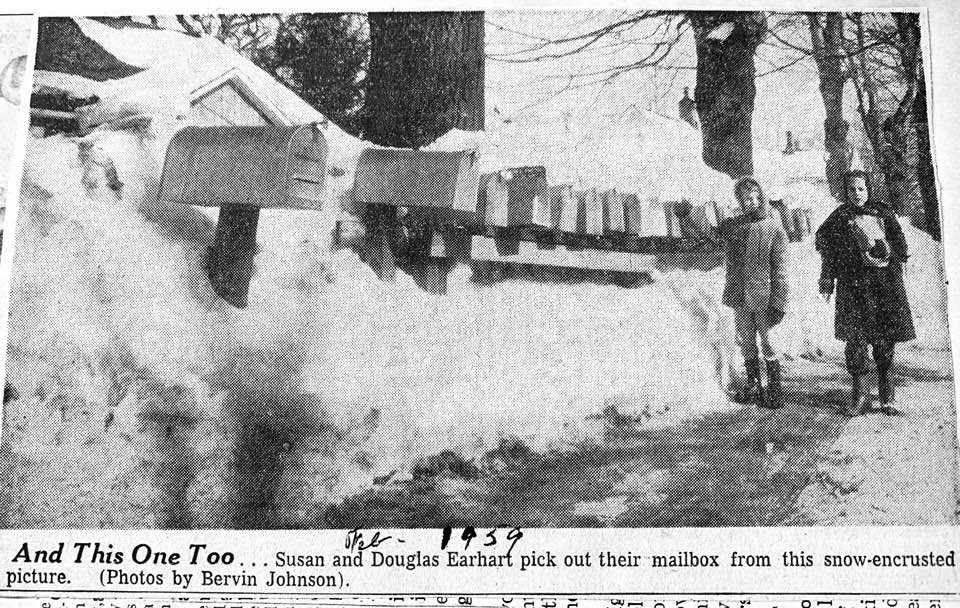
Photo courtesy of Remembering White Lake History
Remembering Snow as Part of Local History
Snow shaped how Whitehall and Montague functioned in winter — from transportation and work to school schedules and daily chores. It influenced architecture, clothing, and community cooperation. Deep snow wasn’t an anomaly; it was an expected part of life along the White Lake shoreline.
As winters continue to change, these memories serve as an important reminder of how closely the community’s past was tied to its environment — and how residents adapted year after year to the conditions they were given.
Stay connected to what’s happening in our area by visiting CatchMark Community.
Powered by CatchMark Technologies — helping people, solving problems. Explore more on our website.