In a time when national politics often feels loud, distant, and deeply divided, a recent community event in Whitehall took a different approach: slow things down, bring people together, and start with the basics.
The Common Ground Community of White Lake hosted its “Civics 101” program on May 5 at the White Lake Community Library, inviting residents to step back from headlines and reconnect with how government actually works and why that matters here at home.
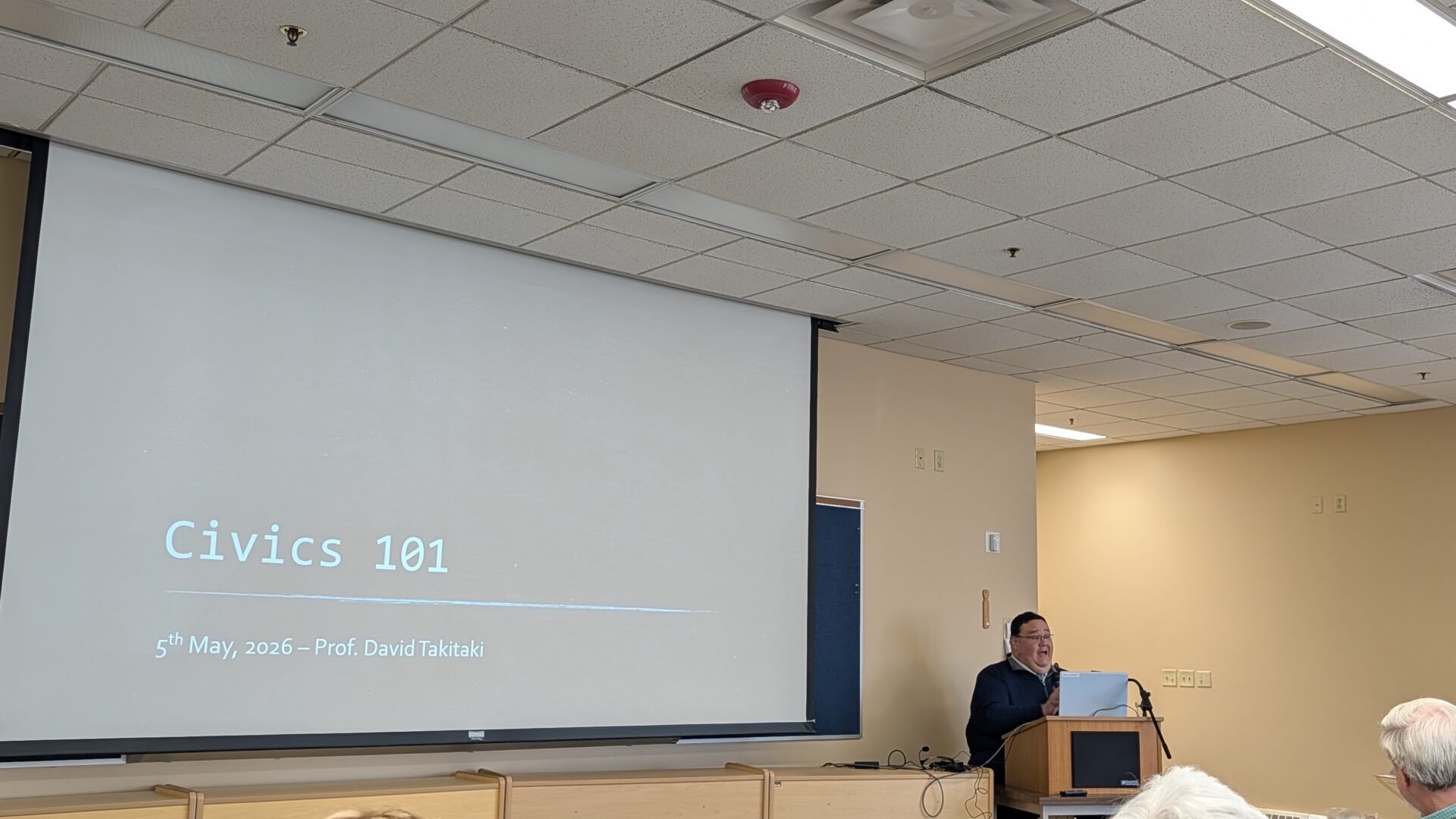
At the center of the evening was Ferris State University political science lecturer Professor David Takitaki, who delivered what he called a condensed version of an entire semester of civics. But the real takeaway was not just information. It was perspective.
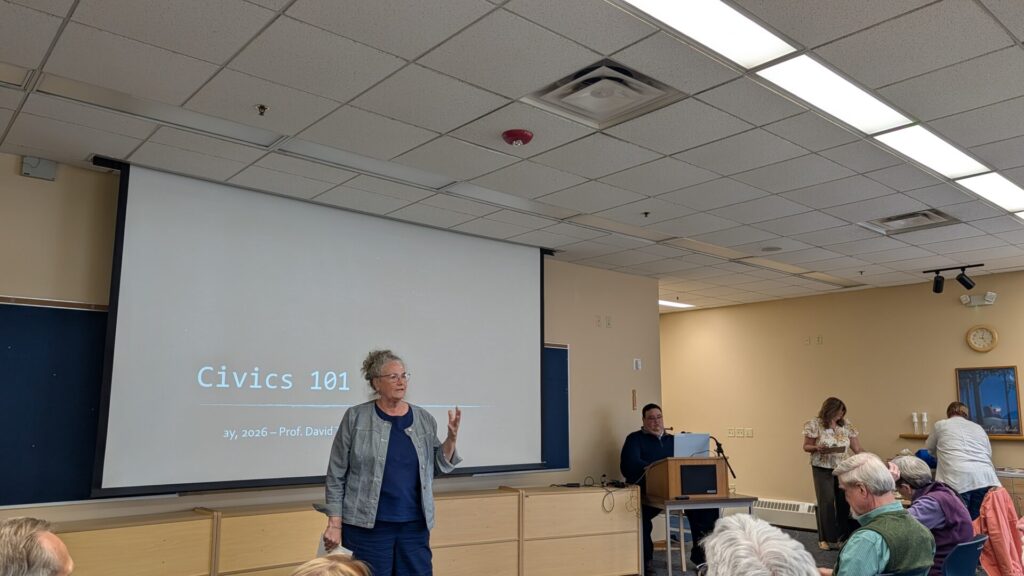
Sue Kennedy Mack, Common Ground Community of White Lake member, talks before presentation begins
Why this mattered now
The event itself was shaped by a concern many in the room already felt.
Community organizers acknowledged the growing sense of division and the way people increasingly consume different versions of reality. Education, they said, is one way to bring people back to a shared foundation.
That idea set the tone for the night. This was not about telling people what to think. It was about making sure everyone understands the system they are part of.
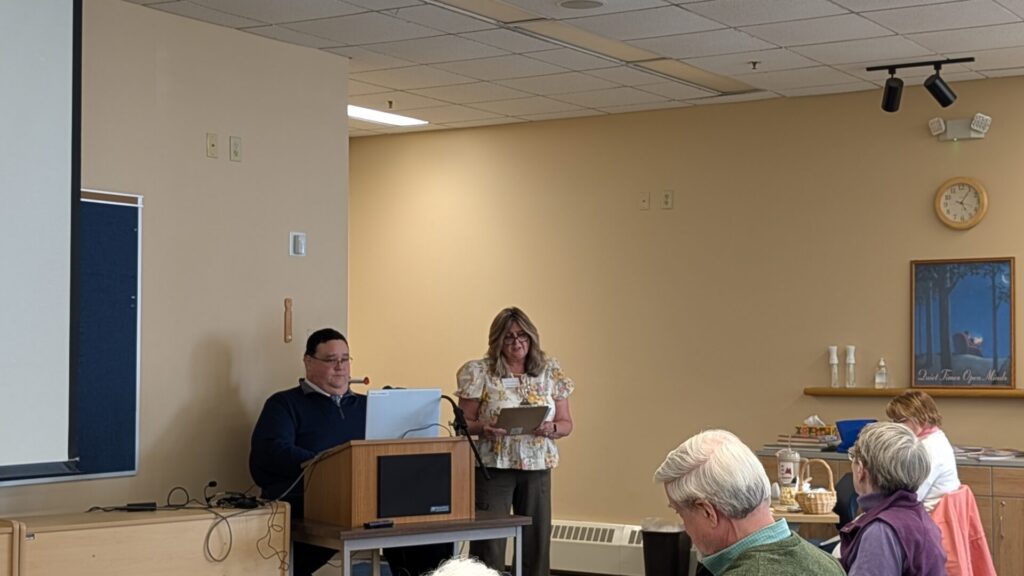
Julie Essenberg Mack, Common Ground Community of White Lake member and local poet, reads a poem before introducing speaker David Takitaki
More than Washington
Takitaki began with the basics: the three branches of government, representation, and the Constitution. But he quickly pushed beyond the typical classroom version of civics.
His central point was simple and easy to miss in everyday conversation.
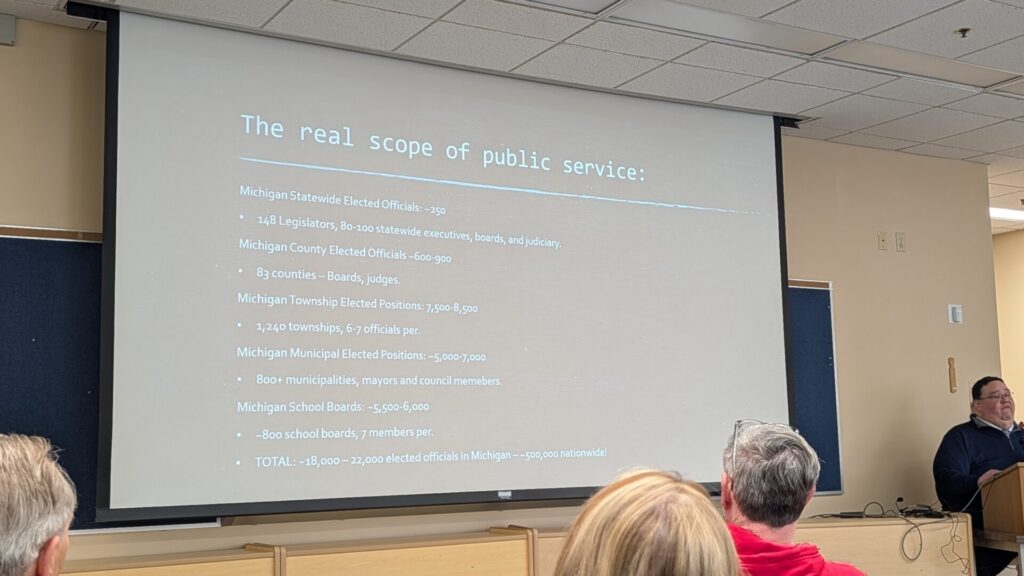
Government is not just what happens in Washington.
While there are 537 elected officials at the federal level, there are tens of thousands of elected positions across the country and thousands within Michigan alone. Most of the people shaping daily life are not in Congress. They are local officials, school board members, township leaders, and public employees working in communities like White Lake.
That shift in perspective reframes how residents think about influence and responsibility.
If government feels distant, it is often because attention is focused on the smallest piece of it.
Representation is not one-size-fits-all
One of the most impactful parts of the presentation centered on how elected officials represent the public.
Takitaki outlined different models, including the idea of a representative acting as a direct voice of the people versus one who uses their own judgment to make decisions. In reality, most operate somewhere in between.
That matters locally because it shapes expectations.
When residents attend a township meeting or vote in a school board election, they are not just choosing a person. They are choosing how they want to be represented.
Understanding that difference can change how people engage with local leaders and how they hold them accountable.
Where local government fits in
The presentation moved through federal, state, and local structures, but the strongest connection to the White Lake audience came when the focus turned to Michigan.
Townships, cities, counties, and school boards all carry real authority. Decisions about roads, water systems, education, and zoning happen at these levels, often with far more immediate impact than federal policy.
Michigan’s system also gives significant power to local governments through what is known as home rule. In many cases, communities can make decisions on their own unless specifically restricted by the state.
That means local participation is not symbolic. It is practical.
It affects daily life.
Public service is closer than it seems
Another key takeaway challenged a common assumption.
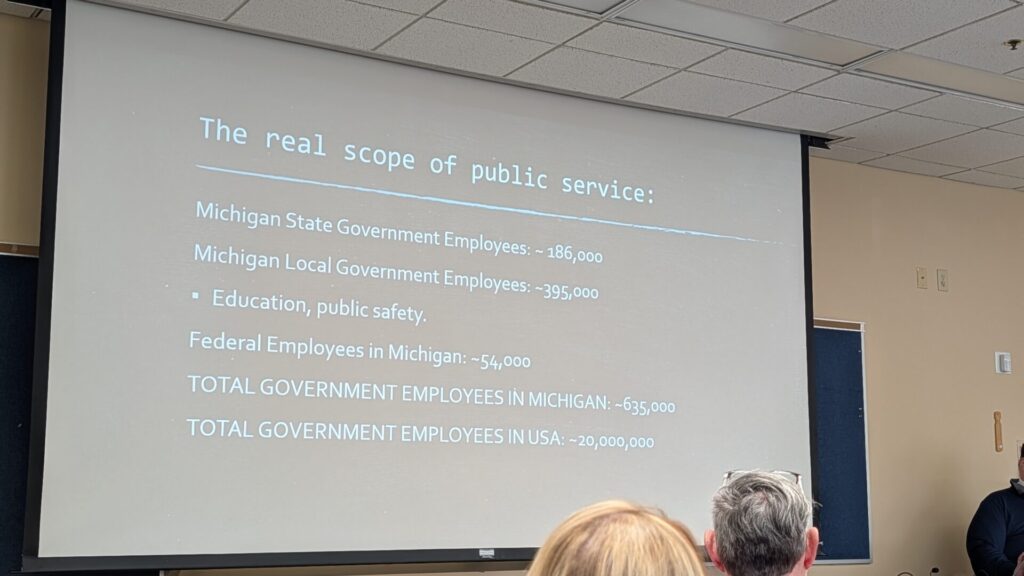
When people think about serving in government, they often picture running for office. But Takitaki emphasized that public service is much broader.
Millions of people across the country work in roles that keep systems running, from maintaining infrastructure to supporting public safety and education. In Michigan alone, hundreds of thousands of residents are part of that network.
Most of that work is not political. It is functional.
And it happens in communities like Whitehall and Montague every day.
What this means for White Lake
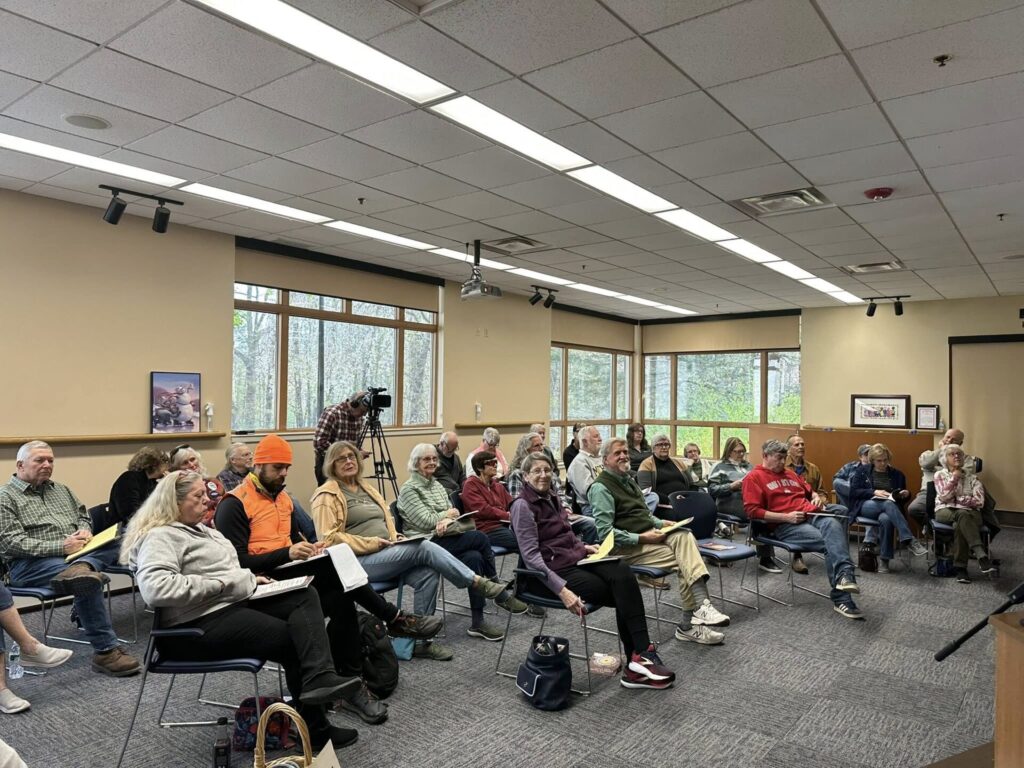
Community members listen as David Takitaki talks about Civics (Photo Credit Julie Essenberg)
For those in attendance, the event was not just a lesson. It was a reminder.
The systems discussed are not abstract. They shape decisions about local schools, development, public resources, and community priorities.
They also depend on participation.
Whether that means attending meetings, asking questions, voting in local elections, or simply understanding how decisions are made, the path to a stronger community starts with awareness.
Looking ahead
The Civics 101 program is part of an ongoing series, with future sessions planned on topics like voting processes, immigration, and regional issues such as data centers.
Each event builds on the same idea.
If people can start from a shared understanding, they have a better chance of having productive conversations, even when they disagree.
And in a moment where division often dominates the national conversation, that kind of local effort may be where real progress begins.
To stay informed about upcoming community discussions and educational events, follow Common Ground Community of White Lake on Facebook.
Follow along on social media for daily updates, community highlights, and moments that happen between the headlines.
Facebook • Instagram • YouTube • TikTok • LinkedIn • X
Stay connected to what’s happening in our area by visiting CatchMark Community.
Powered by CatchMark Technologies — helping people, solving problems. Explore more on our website.