
White Lake is a name most people never question.
It feels obvious. Familiar. Permanent.
But earlier this week on Trivia Tuesday, we asked a simple question. Why is it called White Lake?
The answer starts with the water. But it is really a story about how people first understood this place.
White Lake gets its name from the white, cloudy appearance of the water, caused by marl and clay deposits along the lake and river bottom. When stirred or washed through the outlet, this material gave the water a pale, milky look.
It stood out enough that people named the lake after it.
But that explanation only scratches the surface.
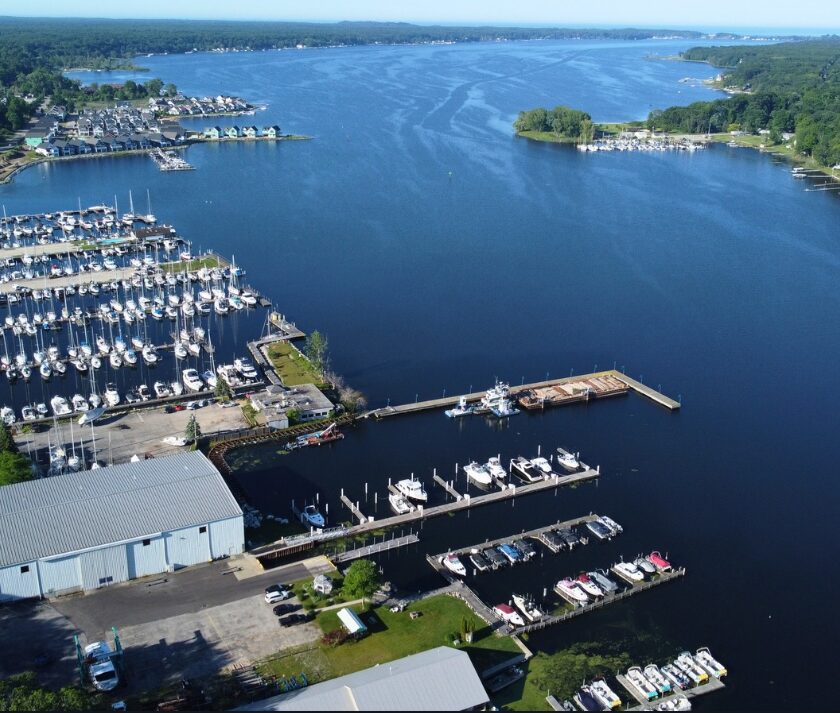
A Name That Was Already Here
Long before Whitehall and Montague were established, Indigenous communities lived along the lake and river. They did not just name the place. They described what it was doing.
One recorded version of the name, shared by an Ottawa Native American, translates roughly to White clay that is being washed away lake.
That is a very different kind of naming.
It is not just about appearance. It is about movement. It is about understanding the land and water as something active, something changing.
In 1876, a local superintendent recalled asking a Native American what his people called White Lake. The response included both the name and a gesture of washing hands, reinforcing the idea of clay being carried away by the water.
This was not a poetic nickname.
It was an observation grounded in lived experience.
What Explorers Saw
When French explorers mapped the area in the 1600s, they recorded the waterway as La Riviere Blanche, or White River.
They saw the same thing.
The pale color of the water. The difference from surrounding rivers. The distinct identity of this place.
Even as language changed, the meaning stayed consistent.
Everyone who encountered the lake noticed something unique and named it accordingly.
What Changed
Over time, the visible “whiteness” of the water became less obvious.
As the channel to Lake Michigan was altered and natural flow patterns changed, much of the marl was washed away or buried. The striking cloudy appearance that once defined the lake is not something most people recognize today.
The name remained.
The visible reason behind it faded.
That shift matters.
Because now we live with the name, but without the experience that created it.
Why This Still Matters
This is more than a question about geology or translation.
It is about how we relate to place.
The name White Lake was not chosen for branding. It was not created to attract visitors. It came from people paying close attention to the world around them and describing it honestly.
Today, we still use the name, but we often skip the story.
And when we lose the story, we lose part of our connection to the place itself.
Looking Forward
If you guessed that White Lake was named for the color of its water, you were right.
But the deeper answer is this.
White Lake was named by people who understood it as something alive, something moving, something shaped by forces you could see and feel.
The name is not just about what the lake looked like.
It is about how it behaved.
The next time you hear the name White Lake, it is worth asking a different question.
What else around us was named for a reason we have forgotten?
Stay connected to what’s happening in our area by visiting CatchMark Community.
Powered by CatchMark Technologies — helping people, solving problems. Explore more on our website.