Keeping White Lake Safe Without Overdoing It
Winter in the White Lake area brings beautiful snow-covered views — and the familiar challenge of icy sidewalks, driveways, and steps. Reaching for road salt is a common solution, but using too much can have unintended consequences for our local environment, including White Lake, nearby streams, and surrounding wetlands.
The good news? A few simple changes in how we salt can make a big difference for both safety and water quality.
Why Less Salt Matters Here
When snow and ice melt, salt doesn’t disappear. It washes into storm drains and eventually into local waterways. Over time, excess salt can increase chloride levels in lakes and rivers, which can harm fish, aquatic plants, and overall water quality. Because White Lake is a defining feature of our community, protecting it starts right at home.
Use the Right Amount
More salt does not mean more effectiveness. In fact, spreading too much salt often wastes product and creates slippery slush.
A helpful rule of thumb:
About one coffee cup of salt is usually enough for a standard driveway or sidewalk.
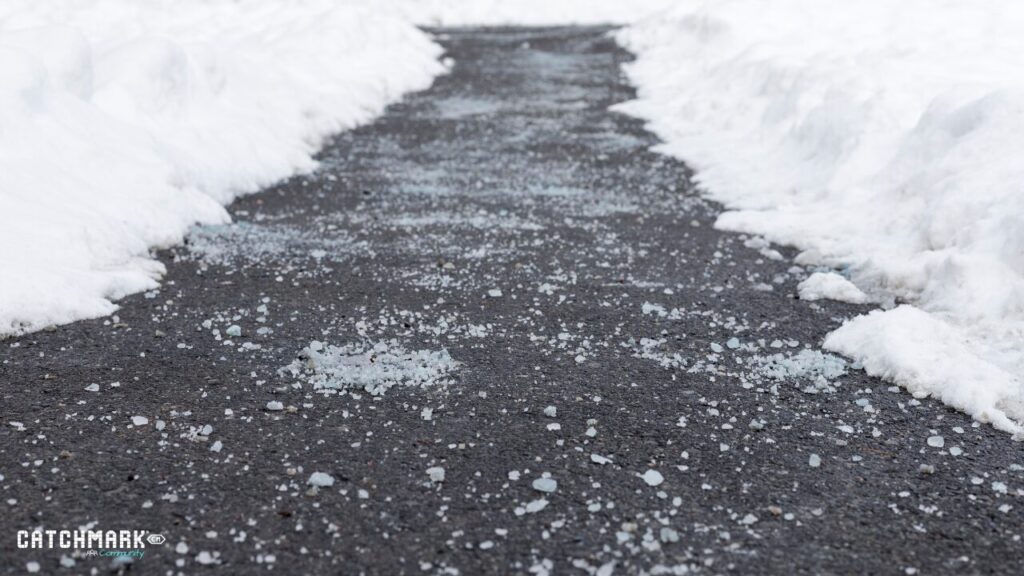
Spread it lightly and evenly rather than dumping it in piles.
Timing Is Everything
Salt works best when temperatures are moderate. If it’s extremely cold, salt becomes far less effective and often just sits on the surface until temperatures rise.
- Apply salt when temperatures are around 15 degrees or warmer
- Avoid salting before a storm if heavy snow is expected — it can be swept away before it has time to work
Shovel First, Salt Second
One of the easiest ways to reduce salt use is to remove as much snow as possible first.
- Shovel early and often during a snowfall
- Clear down to the pavement when you can
- Use salt only to address thin ice or slick spots that remain
This approach keeps walkways safer and significantly reduces how much salt is needed.
Spread, Don’t Stack
Salt works by melting ice around it. When it’s piled up, much of it goes unused.
- Scatter salt evenly across icy areas
- Focus on high-traffic spots like steps, ramps, and entrances
- Avoid dumping large piles at the ends of driveways or sidewalks
Consider Alternatives
In some situations, sand or grit can provide traction without adding chloride to waterways. While these don’t melt ice, they can improve footing during very cold conditions when salt isn’t effective.
Small Choices, Big Impact
Winter safety is important, especially for pedestrians, seniors, and delivery workers navigating icy conditions. By using salt wisely, White Lake area residents can balance safety with environmental stewardship.
A little less salt on our sidewalks today helps keep White Lake healthier for years to come — proving that small actions at home really do add up.
Stay connected to what’s happening in our area by visiting CatchMark Community.
Powered by CatchMark Technologies — helping people, solving problems. Explore more on our website.